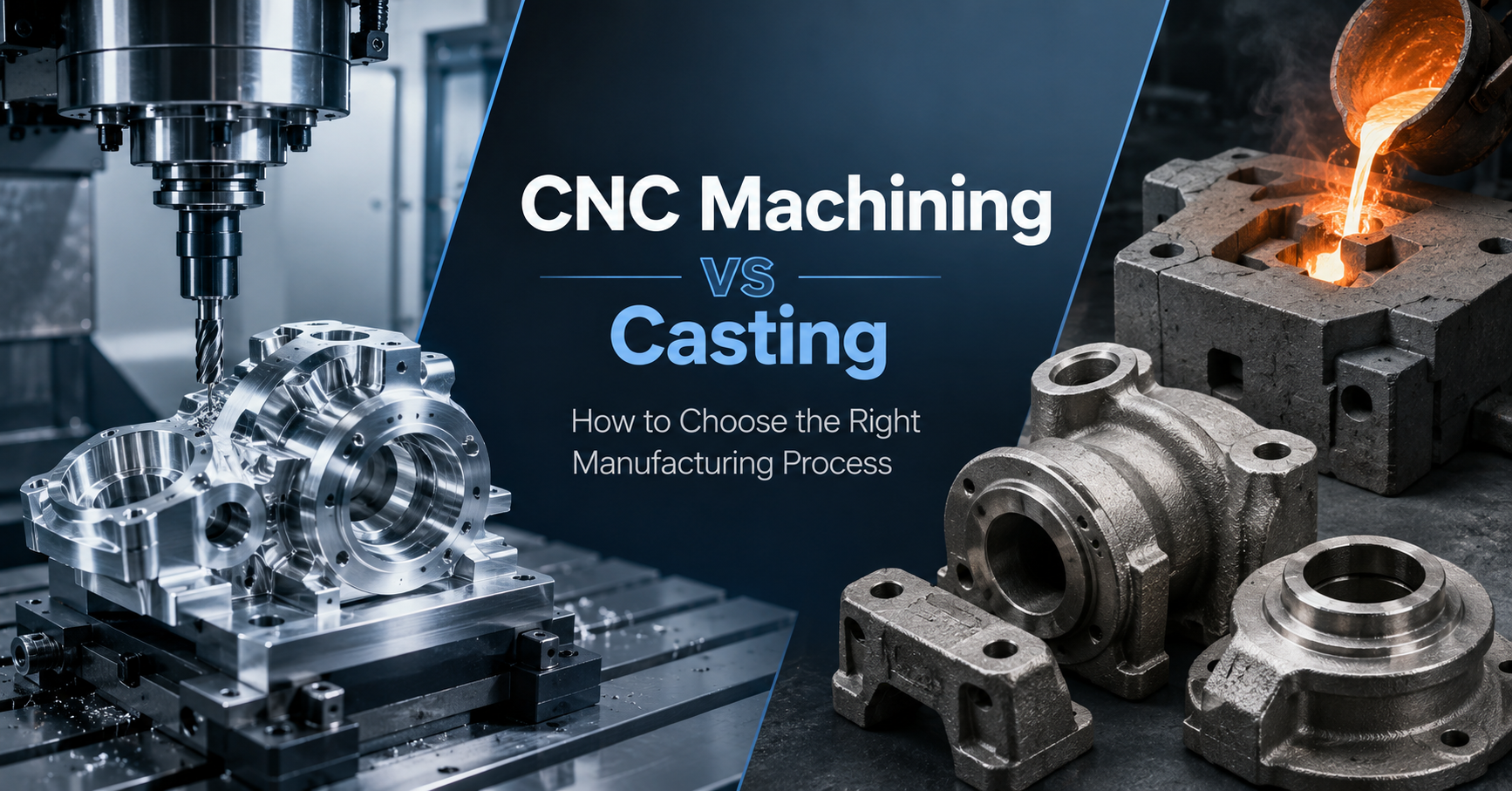

CNC Machining vs Casting: How to Choose the Right Manufacturing Process
Selecting the correct manufacturing process is one of the most important decisions during product development. The chosen process directly affects part accuracy, production cost, delivery time, material performance and future scalability.
For OEM manufacturers, engineers and purchasing teams, the decision between CNC machining and casting is not simply about manufacturing technology. It is about finding the right balance between design requirements, production quantity, quality expectations and total manufacturing cost.
Both CNC machining services and casting processes are widely used for producing custom metal parts. However, each method has different advantages depending on the application.
Understanding the difference between CNC machining vs casting can help companies reduce development risks, improve product performance and build a more reliable supply chain.
What Is CNC Machining?
CNC machining is a precision manufacturing process that removes material from a solid workpiece using computer-controlled cutting tools.
Unlike traditional manual machining, CNC equipment follows programmed instructions to produce complex components with consistent accuracy.
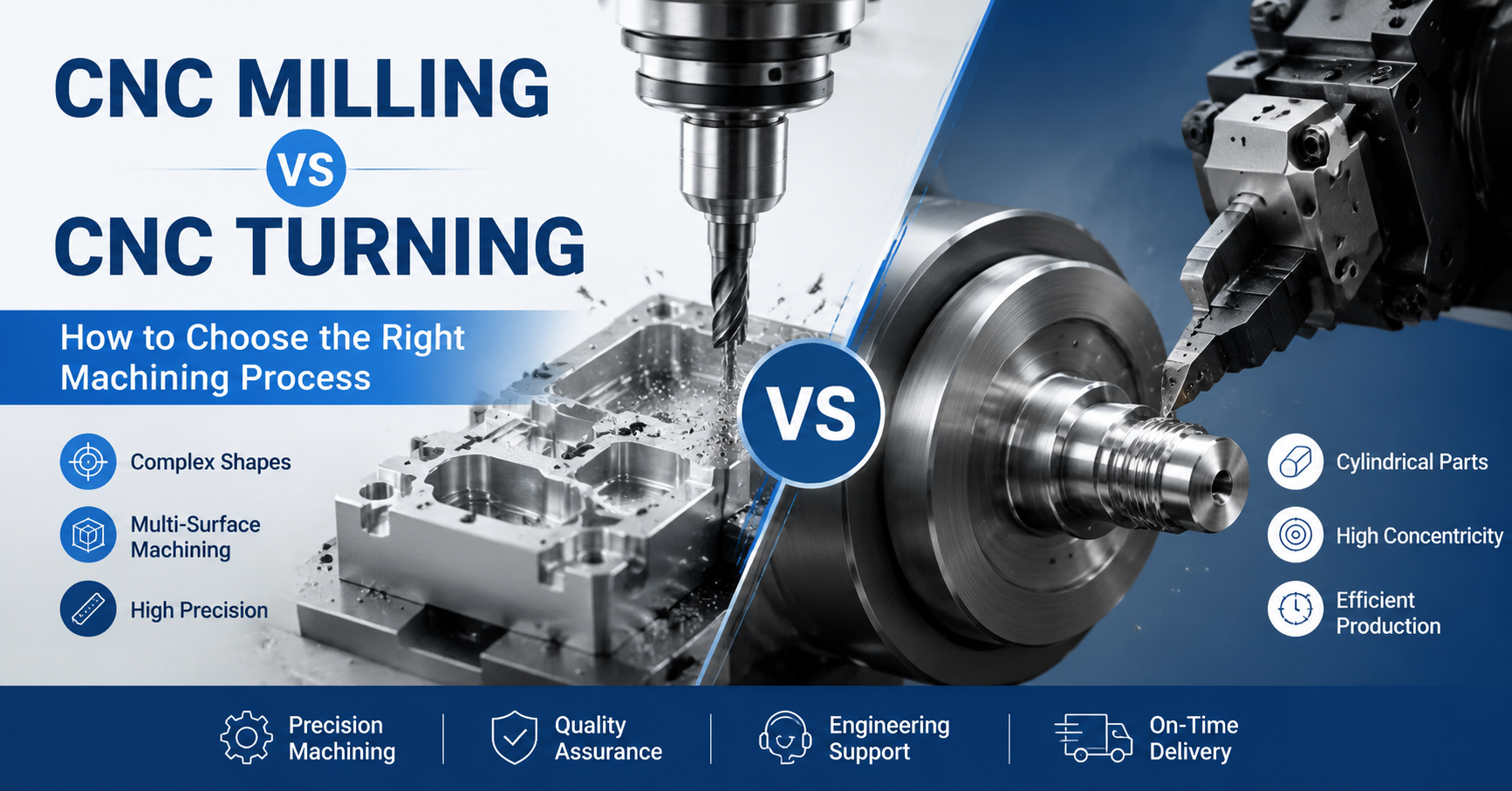
Common CNC machining operations include:
- CNC milling
- CNC turning
- drilling
- boring
- threading
- surface machining
- precision finishing
CNC machining services are widely used for prototypes, low-volume production and precision components where tight tolerances are required.
Typical CNC machined parts include:
- machine housings
- brackets
- shafts
- fixtures
- aluminum components
- stainless steel parts
- mechanical assemblies
The biggest advantage of CNC machining is flexibility. Engineers can modify designs quickly without creating expensive production molds.
What Is Casting Manufacturing?
Casting is a manufacturing process where molten metal is poured into a specially designed mold to create a desired shape.
Compared with CNC machining, casting creates parts closer to their final shape, which can reduce material waste and machining time.
Common casting processes include:
- aluminum die casting
- investment casting
- sand casting
- precision casting
Casting is commonly selected for medium and high-volume production because the initial tooling investment can be distributed across many parts.
Typical cast components include:
- engine housings
- pump bodies
- valve components
- automotive parts
- industrial equipment covers
- structural components
CNC Machining vs Casting: Key Differences
| Factor | CNC Machining | Casting |
|---|---|---|
| Manufacturing method | Material removal | Mold forming |
| Tooling requirement | No permanent mold required | Mold or tooling required |
| Initial investment | Lower | Higher |
| Production volume | Prototype to medium volume | Medium to high volume |
| Accuracy | Very high | Depends on casting process |
| Material waste | Higher | Lower |
| Design flexibility | Excellent for complex machining features | Excellent for near-net-shape parts |
| Lead time | Faster for prototypes | Longer due to tooling |
| Surface finish | Excellent after machining | Depends on casting method |
Accuracy Comparison Between CNC Machining and Casting
For projects requiring extremely precise dimensions, CNC machining is usually the preferred option.
CNC machining services can achieve tight dimensional control because the cutting process is directly controlled by programmed machine movements.
Typical applications requiring CNC machining include:
- bearing locations
- precision holes
- sealing surfaces
- threaded connections
- assembly interfaces
Casting can achieve good dimensional consistency, but factors such as:
- material shrinkage
- mold design
- cooling conditions
- casting defects
may influence final accuracy.
For many industrial applications, manufacturers combine both methods by producing a cast blank and completing critical areas through CNC machining.
This hybrid approach provides:
- lower material consumption
- improved dimensional accuracy
- reduced machining time
Cost Comparison: Which Process Is More Economical?
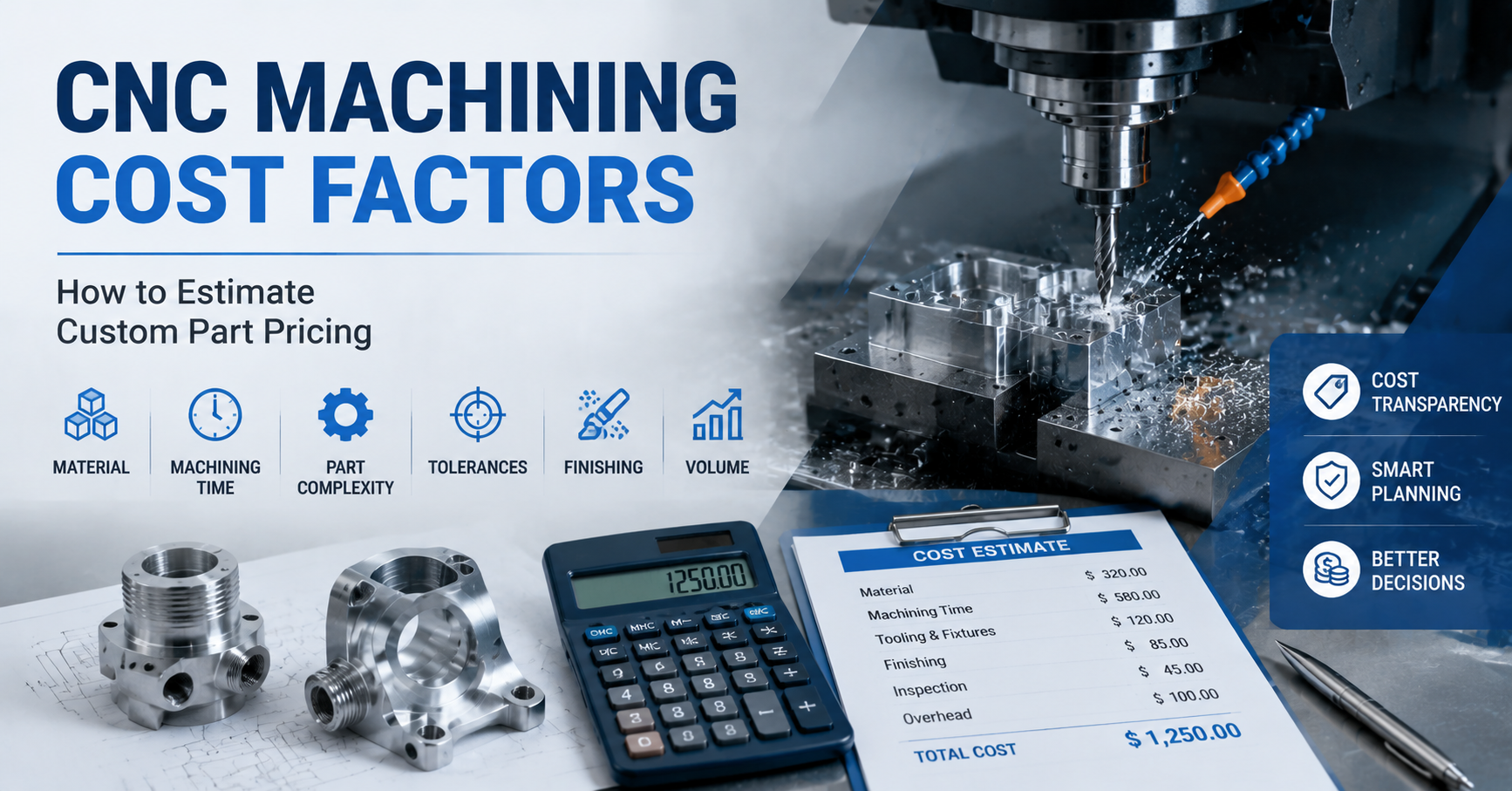
The manufacturing cost depends on several factors:
- production quantity
- material selection
- part complexity
- required tolerance
- finishing requirements
CNC Machining Cost Factors
CNC machining cost is mainly affected by:
- machining time
- material removal volume
- tool consumption
- programming requirements
- finishing operations
CNC machining is often more economical for:
- prototypes
- engineering samples
- low-volume production
- customized components
Casting Cost Factors
Casting cost includes:
- mold development
- tooling
- material preparation
- casting process
- finishing operations
Casting becomes more cost-effective when production volumes increase because tooling costs are distributed across more units.
How Production Volume Affects Process Selection
Production quantity is one of the most important factors when choosing between CNC machining and casting.
Prototype and Low Volume Production
CNC machining is usually the better choice because:
- no mold investment is required
- design changes are easier
- production starts faster
Medium Volume Production
Both processes may be suitable.
The decision depends on:
- part complexity
- tolerance requirements
- annual demand
- material requirements
High Volume Production
Casting often provides better cost efficiency because:
- production cycles are faster
- material utilization improves
- unit cost decreases
Material Selection Considerations
Material requirements also influence the manufacturing decision.
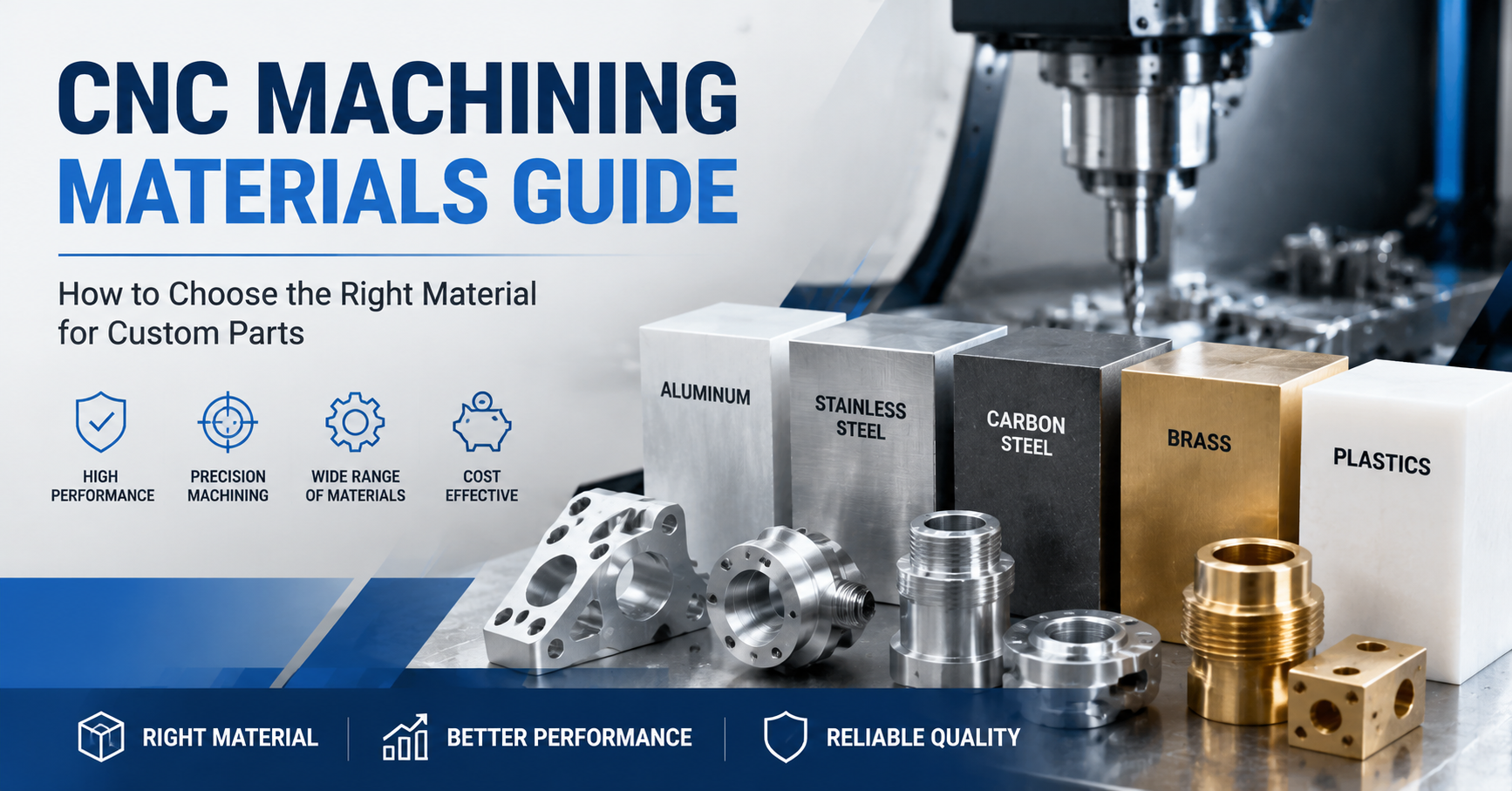
CNC machining can process a wide range of materials including:
- aluminum
- stainless steel
- carbon steel
- brass
- copper
- engineering plastics
Casting materials commonly include:
- aluminum alloys
- stainless steel
- iron alloys
- magnesium alloys
The final selection depends on:
- mechanical strength
- corrosion resistance
- operating environment
- weight requirements
- thermal performance
When Should You Choose CNC Machining?
CNC machining services are recommended when:
- high precision is required
- production quantity is low or medium
- design changes are frequent
- complex machining features are needed
- fast prototypes are required
Typical industries include:
- automation equipment
- aerospace components
- medical devices
- robotics
- industrial machinery
When Should You Choose Casting?
Casting is recommended when:
- production volume is higher
- part geometry is complex
- reducing machining time is important
- lightweight structures are needed
- tooling investment can be justified
Typical applications include:
- automotive components
- pumps
- motors
- industrial housings
- large mechanical structures
How Manufacturers Combine CNC Machining and Casting
Many advanced manufacturing projects do not rely on only one process.
A common production strategy is:
Casting → CNC Machining → Surface Finishing → Assembly
For example:
An aluminum housing may first be created through die casting. Critical mounting surfaces and precision holes are then completed through CNC machining.
This combination provides:
- cost efficiency
- improved accuracy
- better surface quality
- stable production performance
How to Choose the Right Manufacturing Supplier
When selecting a manufacturing partner, buyers should evaluate more than production capability.
Important factors include:
Engineering Support
A reliable supplier should provide:
- design feedback
- manufacturability analysis
- material recommendations
- process optimization
Quality Control
Important quality capabilities include:
- dimensional inspection
- material verification
- process control
- inspection reports
Production Experience
Experienced manufacturers understand:
- tooling risks
- machining challenges
- surface treatment requirements
- production consistency
Frequently Asked Questions
Is CNC machining more accurate than casting?
Generally, CNC machining provides higher dimensional accuracy because material removal is controlled directly through programmed machining operations. Casting accuracy depends on the casting method, material behavior and mold quality.
Which is cheaper, CNC machining or casting?
For prototypes and low-volume production, CNC machining is often more economical because no tooling investment is required. For large production quantities, casting can reduce unit cost.
Can cast parts be CNC machined?
Yes. Many manufacturers use casting combined with CNC machining to achieve both cost efficiency and precision requirements.
What factors should I consider before choosing a manufacturing process?
Important factors include production volume, part complexity, material requirements, tolerance, surface finish and target cost.
Is CNC machining suitable for custom metal parts?
Yes. CNC machining is widely used for custom metal parts because it supports flexible designs, fast production and high accuracy.
When should I use investment casting instead of CNC machining?
Investment casting is suitable when complex shapes, difficult-to-machine geometries or reduced material waste are important.
Can manufacturing suppliers support both machining and casting?
Yes. Many OEM suppliers provide integrated manufacturing solutions combining CNC machining services, casting, finishing and assembly.
How can I reduce manufacturing risks?
Working with an experienced supplier, reviewing designs early and selecting the correct manufacturing process can significantly reduce production problems.