01
Surface review
Confirm steel condition, cleaning and pre-treatment around the desired appearance.
Steel surface reviewed



Low-reflective black oxide finishing for machined steel parts, tooling, fasteners and assemblies. JINGLE reviews substrate, appearance, masking and post-treatment requirements before processing.
Black oxide finishing for tooling, industrial equipment, automation, mobility and custom OEM programs.






A quick view of the information buyers need before sending a black oxide RFQ. Final values are confirmed against substrate, appearance, masking and post-treatment requirements.
| Parameter | Capability details |
|---|---|
| Finish Process | Black oxide conversion coating with oil, wax or sealant post-treatment |
| Part Envelope | To be confirmed - reserve bath, rack and handling envelope |
| Coating Thickness | Minimal dimensional change; final condition confirmed per specification |
| Appearance | Matte to satin black, uniformity confirmed per project |
| Materials | Carbon steel, alloy steel, tool steel and compatible ferrous parts |
| Masking | Threads, bores, contact points and cosmetic zones masked per drawing |
| Production Volume | Prototype, low-volume and batch production |
| Accepted Drawing Formats | STEP, IGES, Parasolid, SolidWorks, PDF drawing and DXF |
01
Confirm steel condition, cleaning and pre-treatment around the desired appearance.
Steel surface reviewed
02
Protect threads, bores and contact faces where the finish must not interfere with assembly.
Critical fits protected
03
Match oil or sealant to handling, corrosion and low-reflection requirements.
Post-treatment matched
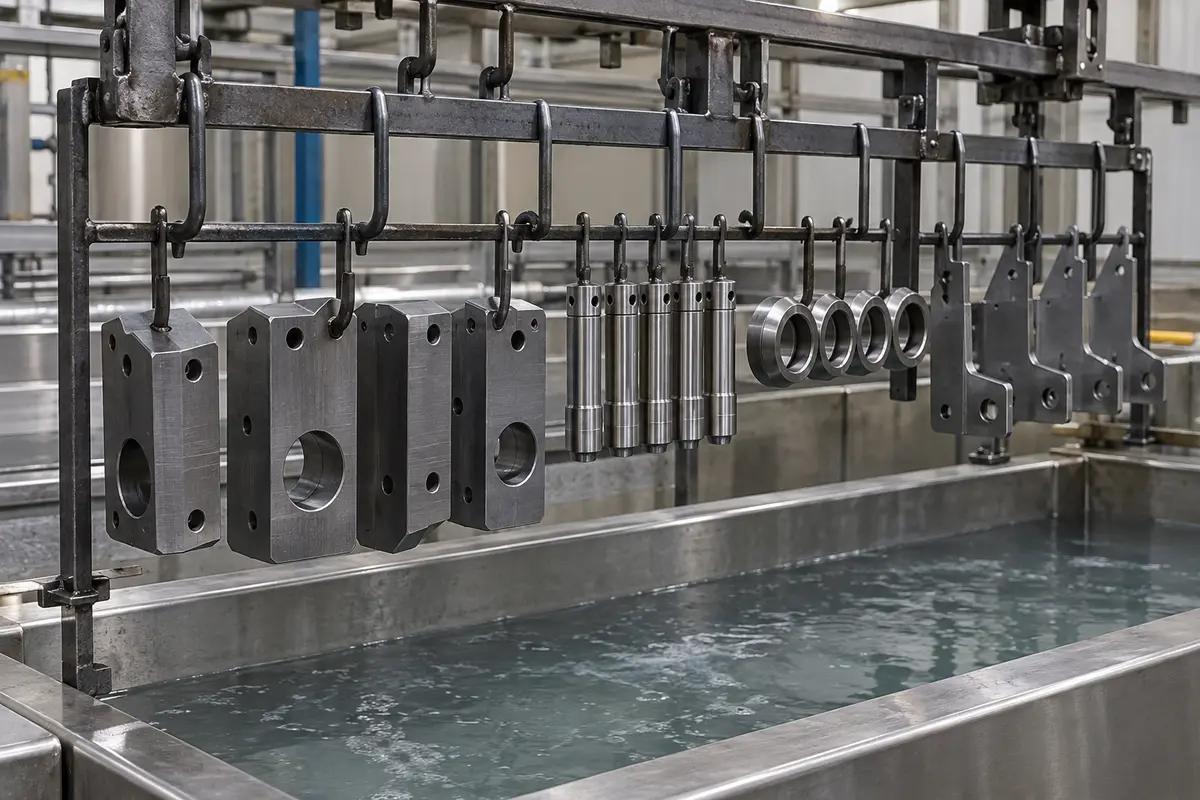
Conversion coating tanks, racks and controlled handling equipment.
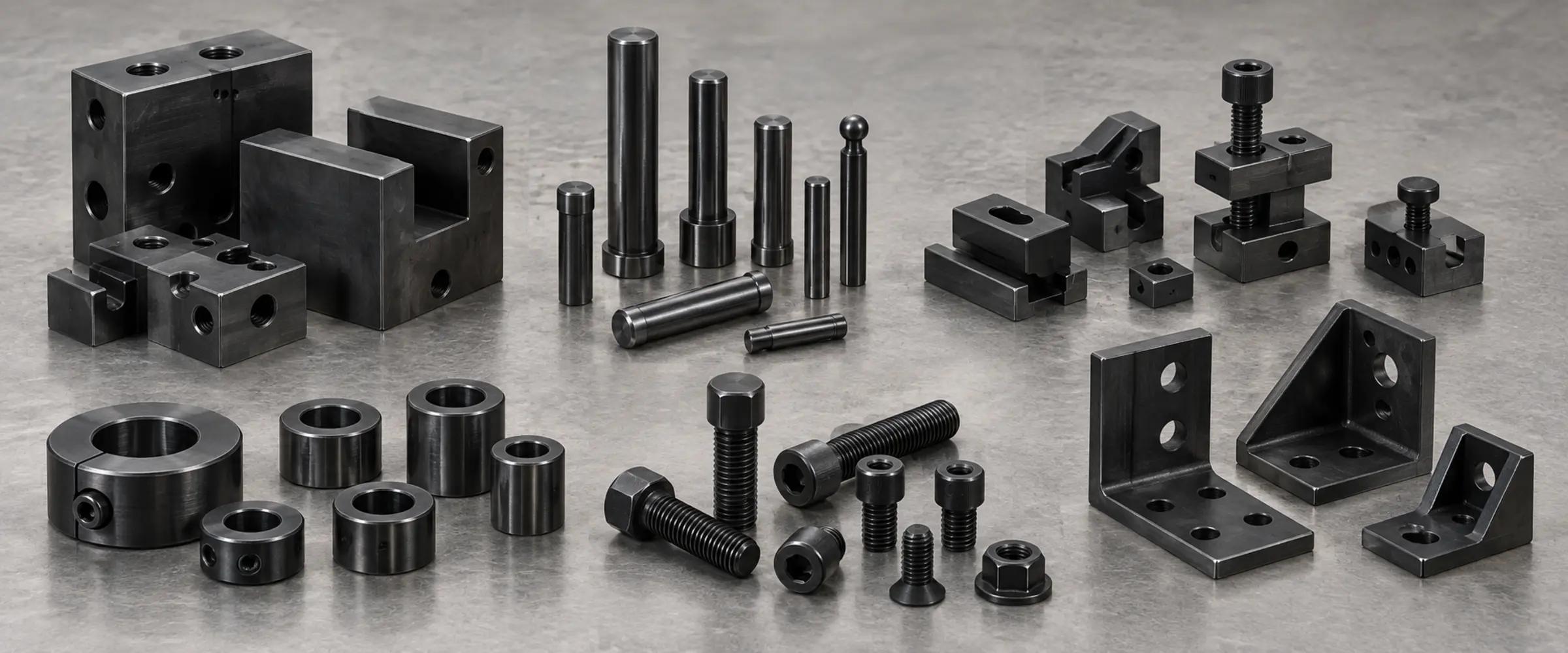
Machined steel parts progressing through cleaning and oxide treatment stages.
Finished parts checked against appearance references and dimensional requirements.
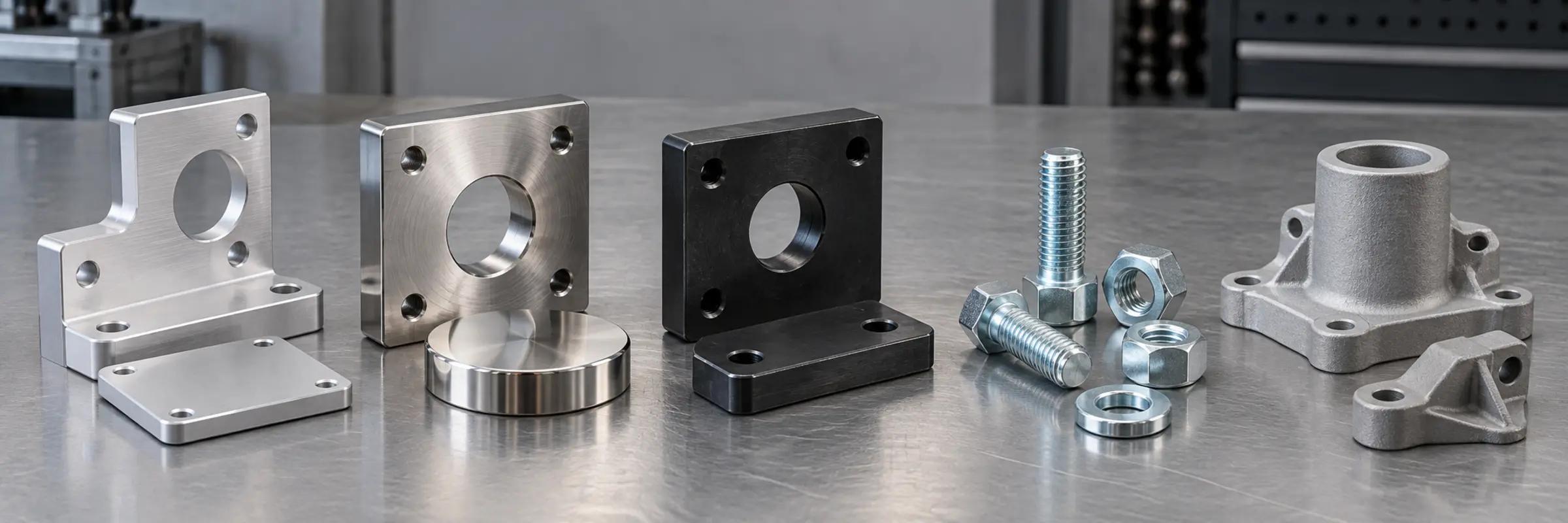
Low-reflective finishes with critical dimensions reviewed.
Tooling surfaces with defined appearance and post-treatment requirements.
Hardware with no-coat areas and handling protection specified.
Workholding parts with contact faces and assembly fits protected.
Precision cylindrical parts reviewed for final fit and oil or sealant use.
Custom steel components finished to the agreed appearance specification.
low-reflective hardware
high-strength parts
tooling surfaces
precision interfaces
wear-resistant components
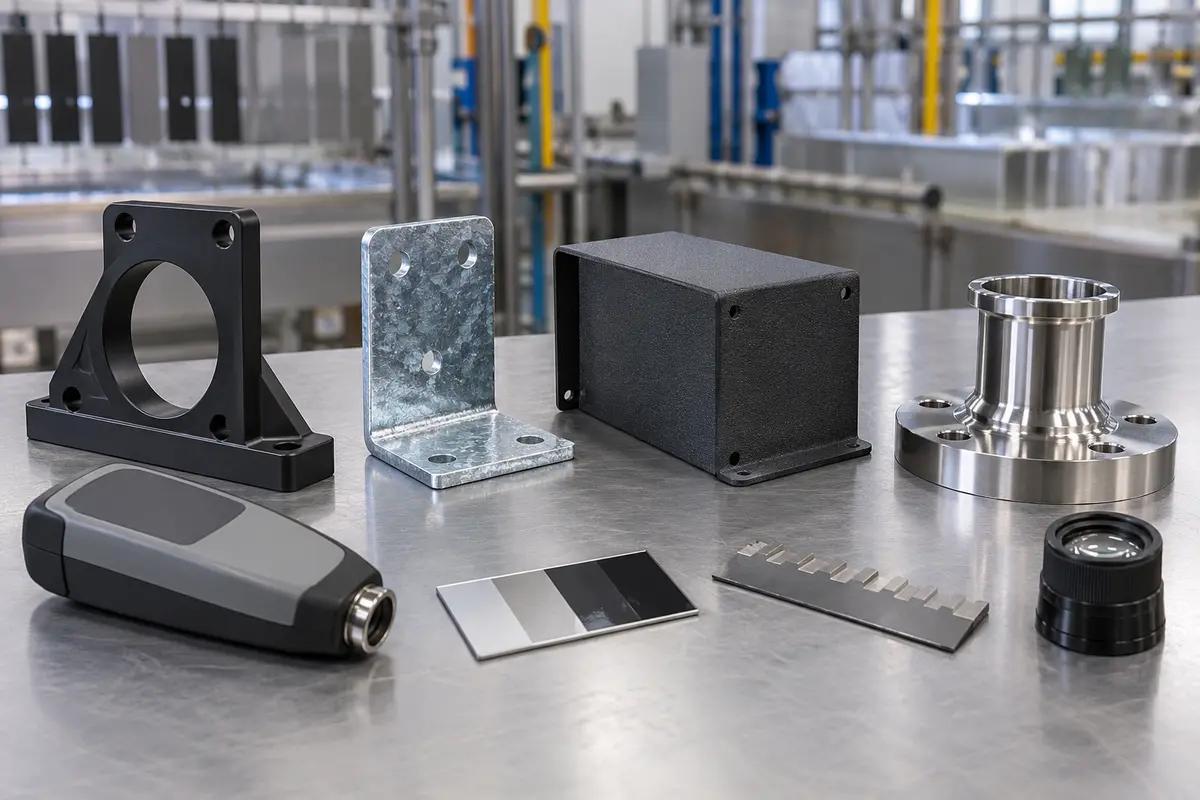
Review steel grade, heat-treated condition and surface preparation needs.
Verify cleaning and no-coat areas against the approved drawing.
Compare black appearance and coverage with the agreed reference.
Check final fits and confirm the selected corrosion-protection post-treatment.

01
Confirm appearance, masking and fit on first articles.
02
Support launch quantities with approved samples and controlled racking.
03
Repeat the approved cleaning, oxide and post-treatment route.
01
Review appearance, masking and functional interfaces before processing.
02
Match oil, wax or sealant to handling and service requirements.
03
Confirm initial finish samples before launch quantities and repeat runs.
04
Inspect visual uniformity and critical fits without assuming zero dimensional impact.
05
Agree finish approvals, material records and post-treatment documentation.
06
Clarify steel condition, appearance and quantity before defining the finish route.
Carbon steel, alloy steel, tool steel and compatible machined or heat-treated ferrous parts can be reviewed. Steel condition and the specified finish standard determine the suitable preparation and treatment route.
Matte to satin black appearances and oil, wax or sealant post-treatments can be reviewed. Black oxide provides limited corrosion protection on its own, so the service environment and supplementary protection must be considered.
Threads, bores and contact areas can be evaluated for masking where the finish must be excluded. Identify critical zones, dimensions and assembly requirements on the drawing.
Black oxide generally has minimal dimensional buildup, but critical fits still require review. Specify tolerances and any post-treatment restrictions so final dimensions and assembly condition can be verified.
Finish approval, post-treatment and agreed inspection records can be provided within the project scope. Include appearance references, critical fits and required documentation with the RFQ.
Send the drawing with substrate, appearance, masking, post-treatment, quantity and critical dimensions. Include handling and corrosion-protection expectations so a suitable finish route can be reviewed.
Send the drawing with substrate, appearance, masking, post-treatment and quantity requirements. We will review the finish route before quoting.

Related surface finishing processes