01
Wire and heading review
Confirm material condition, lubrication and reduction limits before tooling release.
Wire condition reviewed


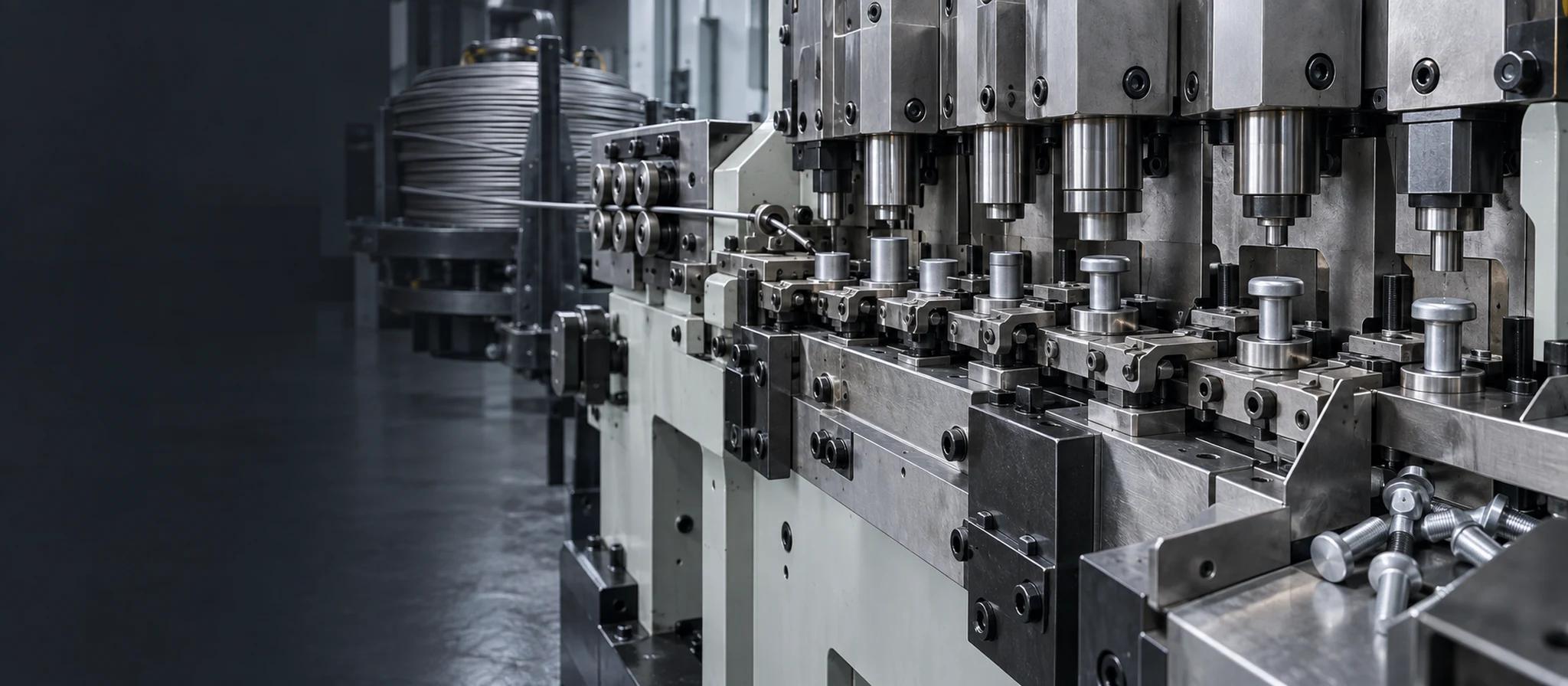
High-repeatability cold heading for screws, bolts, rivets, pins and custom headed components. JINGLE reviews wire condition, die sequence, thread route and inspection requirements before production.
Headed components for automotive, industrial equipment, electronics, hardware and custom OEM programs.






A quick view of the information buyers need before sending a cold heading RFQ. Final values are confirmed against wire size, head geometry, die sequence and volume.
| Parameter | Capability details |
|---|---|
| Heading Process | Single-die, multi-die, upset, extrusion and project-specific cold heading |
| Head Diameter / Length | To be confirmed - reserve header and die envelope |
| Typical Tolerance | To be confirmed - quote-specific heading and shank range |
| Wire / Bar Diameter | To be confirmed - feed range by material and machine |
| Materials | Carbon steel, alloy steel, stainless steel, aluminum, copper and brass |
| Secondary Operations | Thread rolling, slotting, drilling, trimming, heat treatment and plating |
| Production Volume | Prototype tooling, low-volume and batch production |
| Accepted Drawing Formats | STEP, IGES, Parasolid, SolidWorks, PDF drawing and DXF |
01
Confirm material condition, lubrication and reduction limits before tooling release.
Wire condition reviewed
02
Sequence upsetting, extrusion and pointing to protect head fill and shank geometry.
Head and shank geometry controlled
03
Coordinate rolling, trimming and heat treatment around the finished specification.
Threading route coordinated
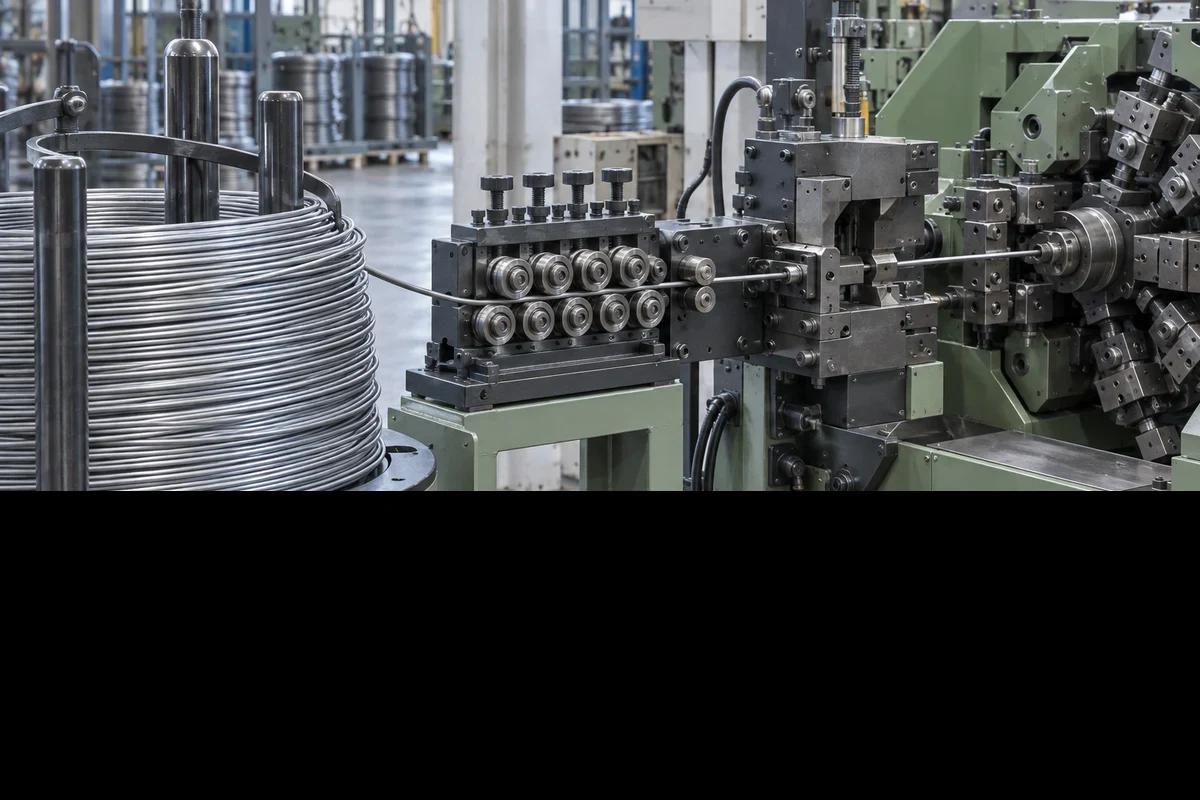
Cold headers, wire feed and transfer tooling within guarded work zones.
Die stations forming heads and shanks through a planned sequence.
Headed hardware sorted into trays for thread and dimensional inspection.
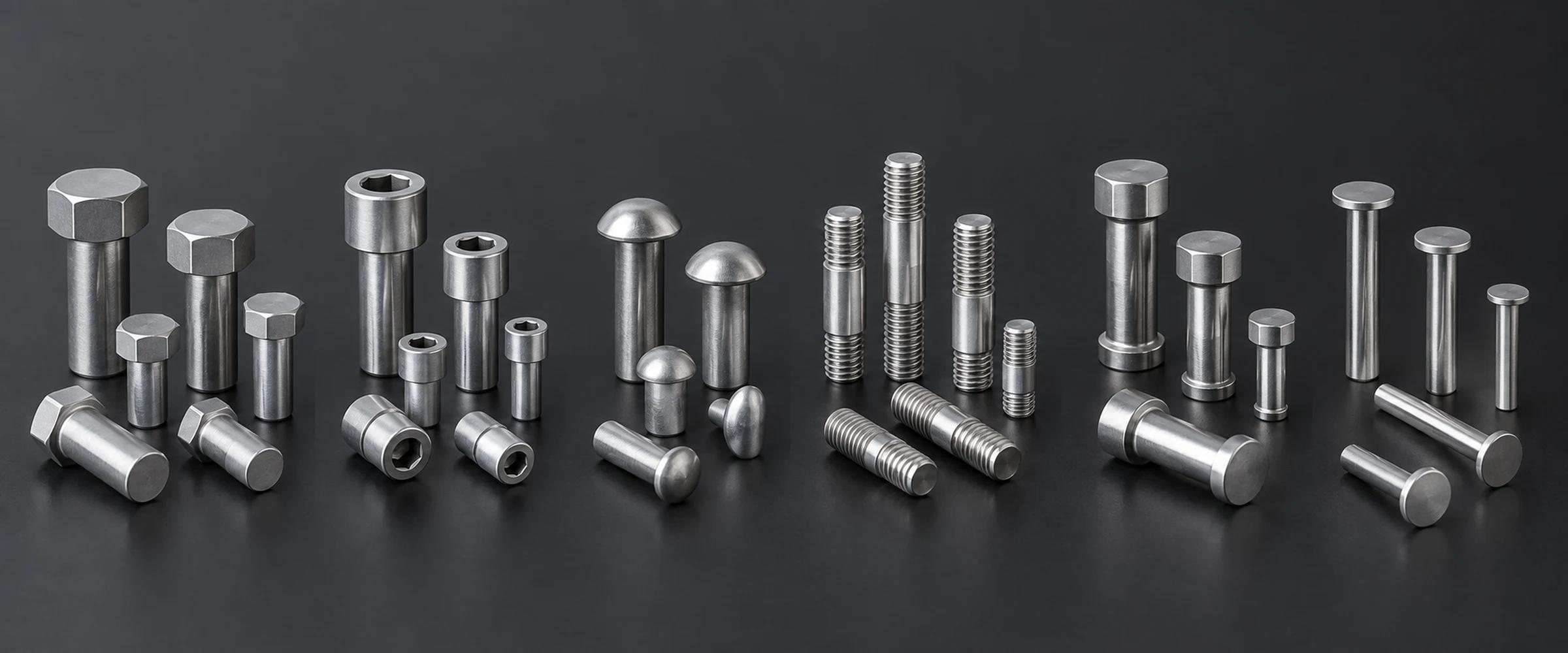
Headed blanks with thread and drive details defined by the drawing.
Formed heads and shanks for fastening and locating applications.
Custom lengths and stepped features with planned secondary operations.
Controlled shoulders and under-head interfaces for assembly fits.
Production fasteners with agreed material, treatment and inspection requirements.
Application-specific head forms reviewed against wire and die constraints.

structural fasteners
high-strength studs
corrosion-resistant hardware
lightweight pins
conductive terminals
Check wire grade, coil condition and the required material records.
Verify initial head fill, shank length and specified shoulder features.
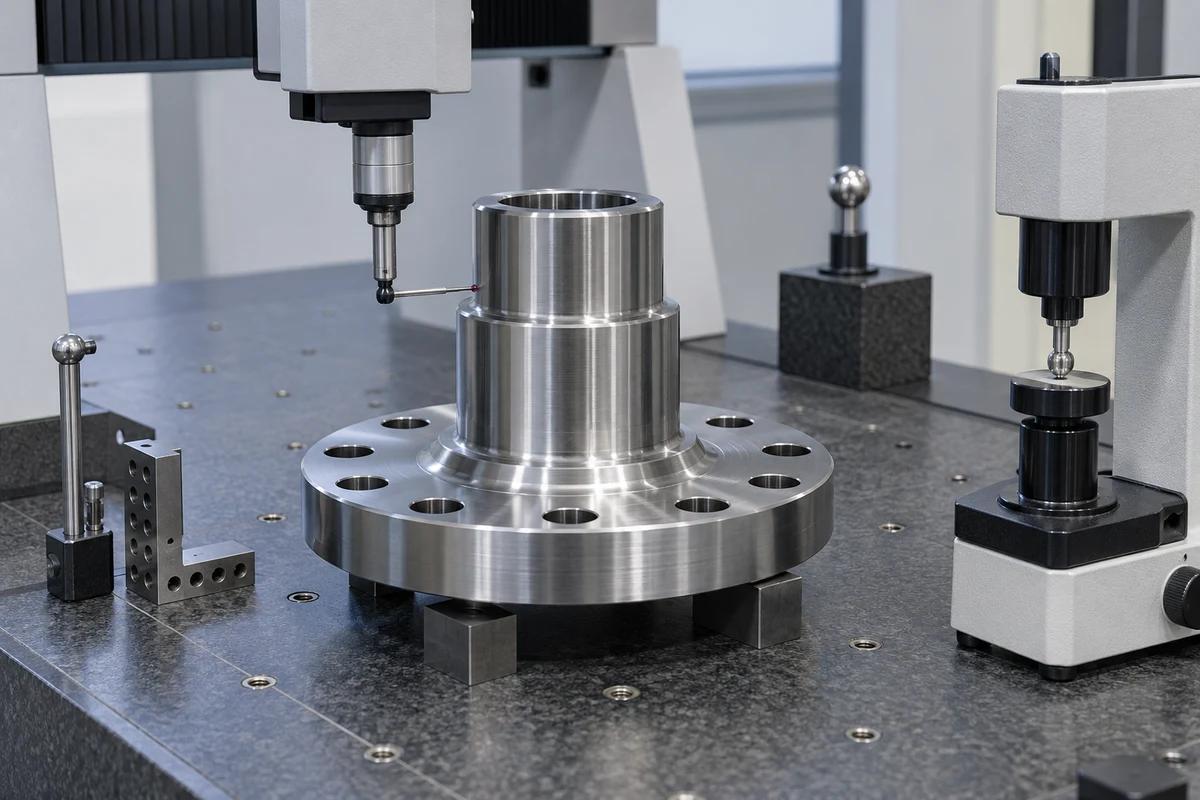
Inspect threads, formed features and hardness where specified in the plan.
Confirm drawing dimensions and required lot release records.
01
Validate head geometry, shank length and assembly fit before final tooling.
02
Support launch quantities with documented die and inspection checkpoints.
03
Repeat approved tooling with stable heading, threading and release control.
01
Review head volume, reduction limits and starting wire before tooling release.
02
Sequence heading stages around head fill, shoulder features and shank geometry.
03
Plan first-off validation and launch quantities before repeat production.
04
Align thread gauging, formed-feature checks and hardness inspection with the specification.
05
Agree material traceability and heading process records with the RFQ.
06
Clarify wire size, material, quantities and secondary operations before confirming a quote.
Bolts, screws, rivets, pins and other hardware with headed or stepped geometry are candidates for cold heading. Head volume, shank proportions, material formability and demand determine the suitable die sequence.
Carbon steel, alloy steel, stainless steel, aluminum, copper and brass can be reviewed. The wire or bar diameter range is confirmed against material condition, machine envelope and the required geometry.
Custom head and shoulder features can be evaluated against material reduction and die access limits. Send the drawing with head dimensions, shoulder fits and critical tolerances for tooling review.
Thread rolling, slotting, drilling, trimming, heat treatment and plating can be coordinated as secondary operations. Include thread details, treatment condition and finish requirements with the headed-part drawing.
First-article and thread inspection records can be included when agreed in the quality plan. Specify thread standards, gauges, acceptance criteria and documentation requirements at quotation.
Send the drawing, wire size, material grade, quantity and required secondary operations. Include head and shank dimensions, thread details and inspection requirements so the die sequence can be reviewed.
Send the drawing with material, wire size, head dimensions, quantity and secondary operations. We will review the die sequence and quote path.
Related forging processes