
Why Understanding CNC Machining Processes Matters
Choosing the correct machining process is an important decision for companies developing custom industrial components.
Although CNC milling and CNC turning are both computer-controlled manufacturing processes, they are designed for different types of parts and production requirements.
Selecting the wrong process may lead to:
- unnecessary machining costs
- longer production time
- inefficient manufacturing methods
- difficulty achieving required tolerances
For OEM buyers, engineers and purchasing teams, understanding the difference between CNC milling vs CNC turning helps improve product quality and optimize manufacturing decisions.
The best machining solution depends on:
- part geometry
- material
- tolerance requirements
- production volume
- surface finish
- application environment
What Is CNC Milling?
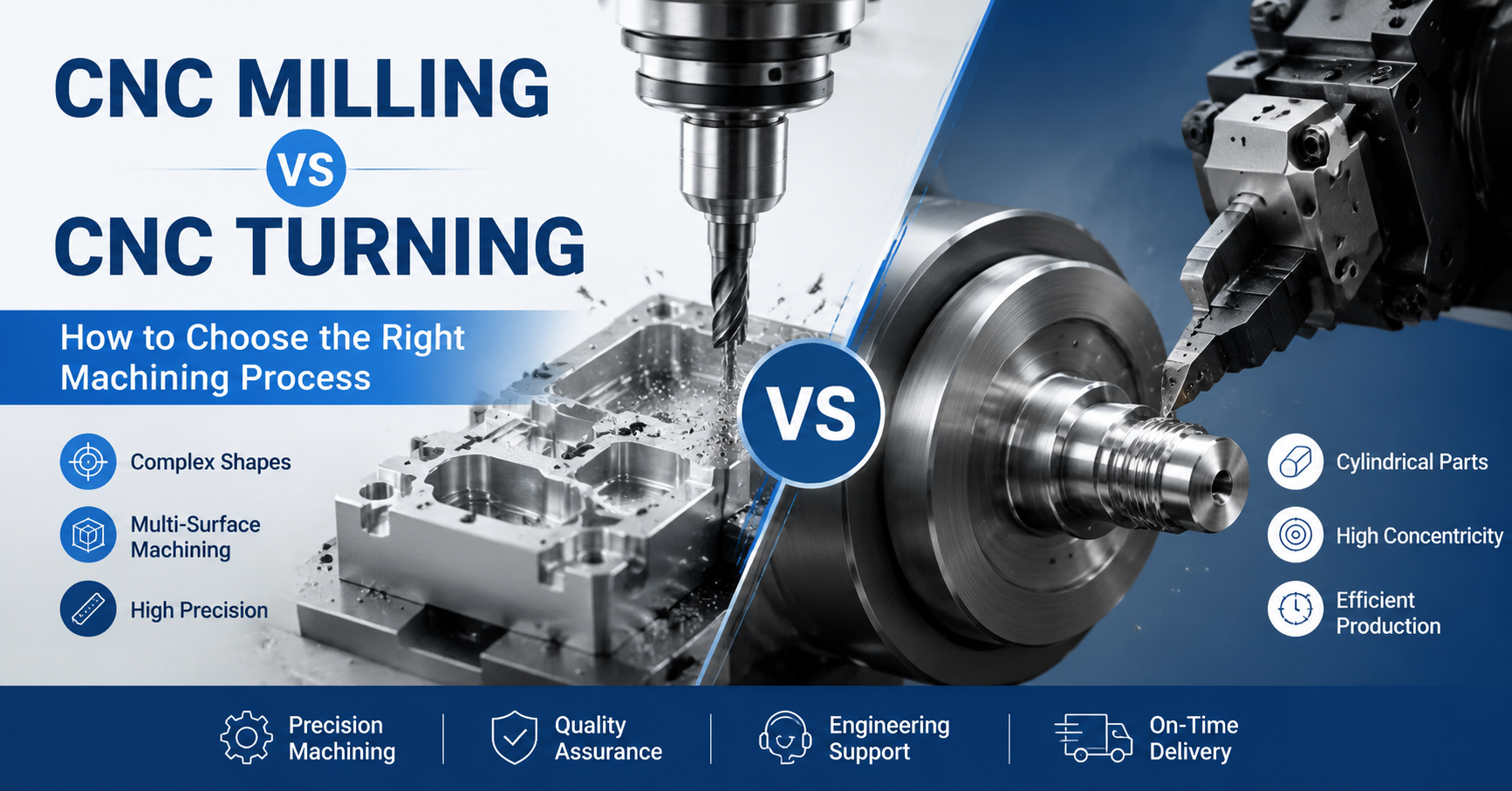
CNC milling is a machining process where rotating cutting tools remove material from a stationary workpiece.
The cutting tool moves along programmed paths to create complex shapes and features.
Common CNC milling operations include:
- face milling
- pocket milling
- slot machining
- drilling
- tapping
- contour machining
CNC milling is suitable for parts requiring:
- multiple surfaces
- complex profiles
- irregular shapes
- precision holes
- detailed features
Typical CNC milling parts include:
- brackets
- housings
- plates
- fixtures
- machine components
- structural parts
What Is CNC Turning?
CNC turning is a machining process where the workpiece rotates while a stationary cutting tool removes material.
The rotating movement makes CNC turning especially suitable for cylindrical components.
Common CNC turning operations include:
- external turning
- internal boring
- threading
- grooving
- facing
- drilling
CNC turning services are commonly used for:
- shafts
- bushings
- sleeves
- pins
- rings
- cylindrical connectors
CNC Milling vs CNC Turning: Main Differences
| Factor | CNC Milling | CNC Turning |
|---|---|---|
| Workpiece movement | Fixed workpiece | Rotating workpiece |
| Cutting tool | Rotating tool | Stationary tool |
| Best for | Complex shapes | Cylindrical parts |
| Geometry | Multi-surface components | Round components |
| Typical parts | Housings, brackets | Shafts, bushings |
| Setup | More complex | Usually simpler |
| Production efficiency | High for complex parts | High for round parts |
Part Geometry: The Key Selection Factor
The shape of the component is usually the first consideration when choosing between CNC milling and CNC turning.
When to Choose CNC Milling
CNC milling is preferred when parts contain:
- irregular surfaces
- pockets
- slots
- angled features
- multiple machining directions
Examples:
A machine housing with mounting holes and internal cavities is usually produced through CNC milling.
A precision bracket with multiple faces and complex geometry is also suitable for milling.
When to Choose CNC Turning
CNC turning is ideal for components with rotational symmetry.
Typical examples include:
- shafts
- bushings
- spacers
- threaded parts
- cylindrical sleeves
For example:
A transmission shaft requires precise diameter control and concentricity, making CNC turning the better choice.
Accuracy Comparison
Both processes can achieve high precision, but their strengths differ.
CNC Milling Accuracy
CNC milling provides excellent control for:
- position accuracy
- complex surfaces
- hole patterns
- multi-feature components
It is commonly used where several features must maintain accurate relationships.
CNC Turning Accuracy
CNC turning provides excellent control for:
- diameter accuracy
- roundness
- concentricity
- surface finish
It is ideal for components requiring precise rotational dimensions.
Material Compatibility
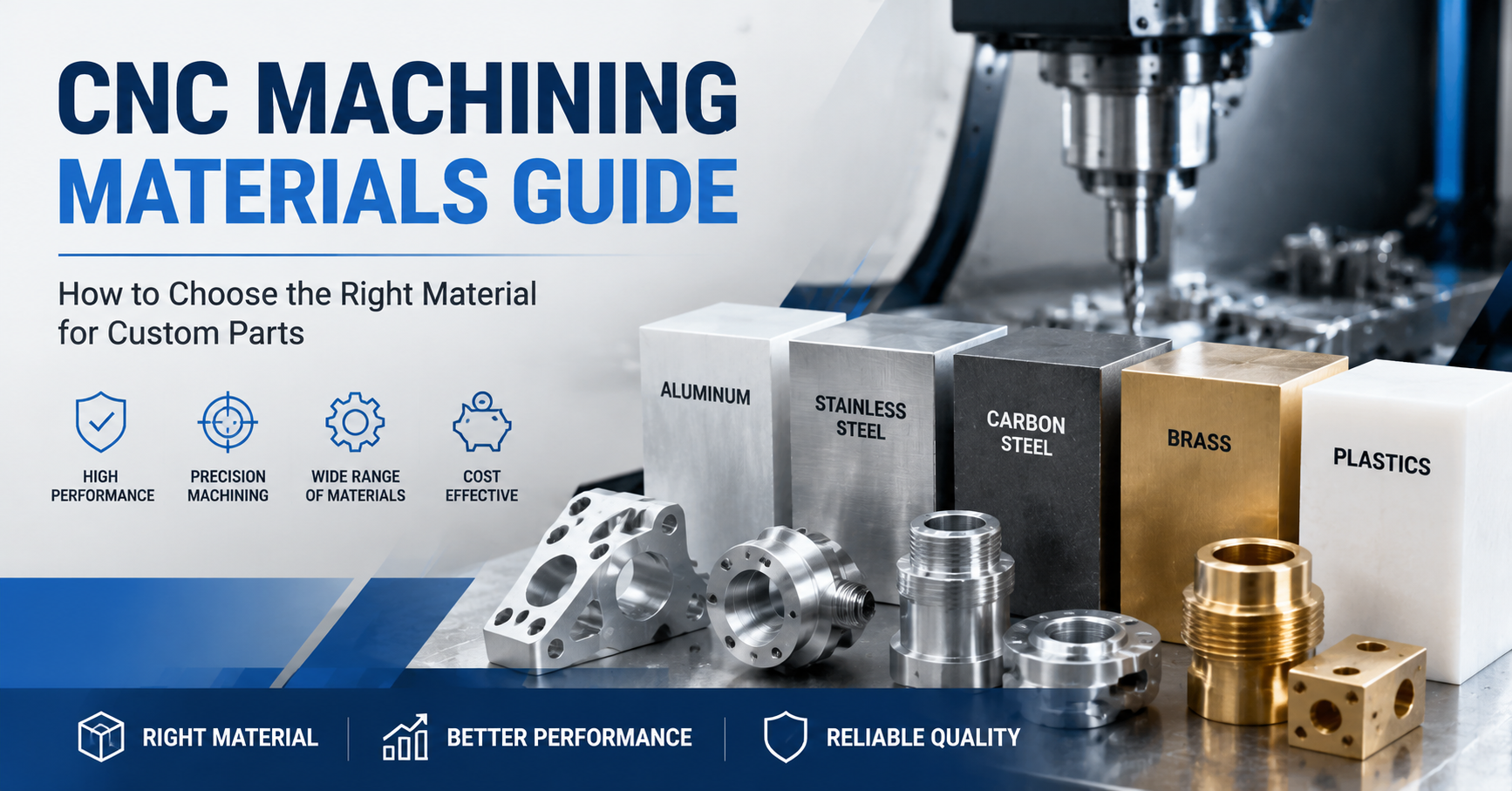
Both CNC milling and CNC turning can process a wide range of materials.
Common materials include:
| Material | Applications |
|---|---|
| Aluminum | Lightweight industrial parts |
| Stainless Steel | Corrosion-resistant components |
| Carbon Steel | Structural parts |
| Brass | Precision and electrical components |
| Copper | Thermal and conductive applications |
| Engineering Plastics | Lightweight components |
Material selection depends on:
- mechanical requirements
- operating environment
- production requirements
CNC Milling vs CNC Turning Cost Comparison
Manufacturing cost depends on:
- machining time
- material removal
- programming complexity
- tooling requirements
- production quantity
CNC Milling Cost Factors
CNC milling costs may increase because of:
- complex programming
- multiple setups
- specialized fixtures
However, it provides greater flexibility for complex parts.
CNC Turning Cost Factors
CNC turning is often more efficient for cylindrical parts because:
- setup is simpler
- machining cycles are shorter
- material utilization is efficient
For high-volume shaft or bushing production, CNC turning services often provide better cost efficiency.
Can CNC Milling and CNC Turning Be Combined?
Many advanced components require both machining processes.
A typical workflow may include:
CNC Turning → CNC Milling → Surface Finishing → Inspection
For example:
A shaft component may first be turned to achieve accurate diameter dimensions, then milled to create:
- keyways
- flat surfaces
- mounting features
This combined approach provides:
- improved functionality
- reduced production risk
- better overall accuracy
Applications of CNC Milling and CNC Turning
CNC Milling Applications
Common industries include:
- automation equipment
- robotics
- aerospace
- medical devices
- industrial machinery
Typical components:
- housings
- brackets
- fixtures
- machine plates
CNC Turning Applications
Common industries include:
- automotive
- hydraulic systems
- industrial equipment
- power transmission
Typical components:
- shafts
- bushings
- sleeves
- connectors
How to Choose the Right CNC Machining Supplier
Selecting a machining supplier requires evaluating more than equipment.
Important factors include:
Manufacturing Capability
Check whether the supplier supports:
- CNC milling
- CNC turning
- multi-axis machining
- secondary processing
Engineering Support
A reliable supplier should provide:
- DFM suggestions
- process recommendations
- tolerance analysis
Quality Control
Important inspection capabilities include:
- dimensional inspection
- CMM measurement
- surface inspection
- quality reports
Production Experience
Experience with similar parts helps reduce:
- machining risks
- delivery problems
- quality issues
CNC Process Selection Checklist
| Requirement | Recommended Process |
|---|---|
| Round shafts | CNC Turning |
| Bushings | CNC Turning |
| Complex housings | CNC Milling |
| Multi-face parts | CNC Milling |
| Keyway shafts | Turning + Milling |
| Prototype components | CNC Milling or Turning |
| High-volume round parts | CNC Turning |
Common Mistakes When Choosing Machining Processes
Selecting Based Only on Price
The cheapest process may not provide:
- required accuracy
- proper functionality
- long-term reliability
Ignoring Part Design
The geometry of the component should determine the machining method.
Choosing Suppliers Without Engineering Support
Experienced suppliers can recommend better manufacturing solutions before production.
Frequently Asked Questions
What is the difference between CNC milling and CNC turning?
CNC milling uses rotating tools on a fixed workpiece, while CNC turning rotates the workpiece against a cutting tool.
Which process is more accurate?
Both processes can achieve high accuracy. The better choice depends on part geometry and functional requirements.
Is CNC milling more expensive than CNC turning?
Not always. CNC turning is often more efficient for cylindrical parts, while milling is better for complex components.
Can one supplier provide both CNC milling and turning?
Yes. Many professional CNC machining suppliers provide both services for complete manufacturing solutions.
Which process is better for shafts?
CNC turning is usually the preferred process for shafts because it provides excellent control over diameter and concentricity.
Which process is better for complex parts?
CNC milling is usually better for components with multiple surfaces, pockets and irregular geometries.
Can CNC machining support custom parts?
Yes. CNC machining is widely used for prototypes, custom components and production parts.
How do I select the right machining process?
Consider part shape, material, tolerance, quantity and final application requirements.