
Why Material Selection Matters in CNC Machining
Material selection is one of the most important decisions in CNC machining projects.
The material directly affects:
- part strength
- durability
- weight
- corrosion resistance
- machining difficulty
- manufacturing cost
For OEM buyers and engineers, choosing the wrong material can lead to:
- premature product failure
- higher machining costs
- poor performance
- unnecessary production challenges
A professional CNC machining supplier does not only manufacture parts. They also help customers select suitable materials based on the final application requirements.
The best material choice depends on:
- mechanical requirements
- working environment
- production volume
- surface finishing needs
- budget considerations
Common CNC Machining Materials Overview
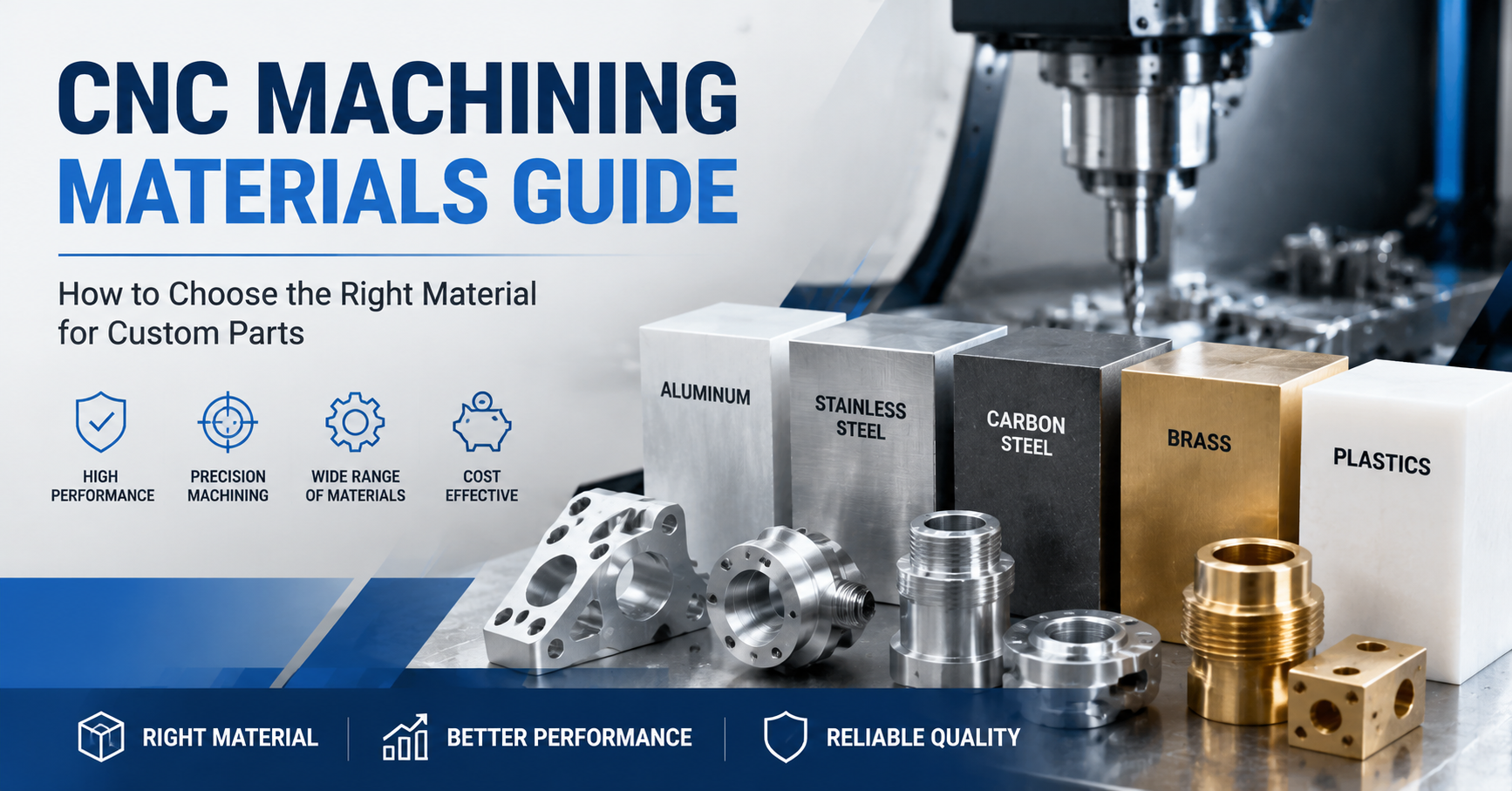
CNC machining supports a wide range of materials, including metals and engineering plastics.
Common materials include:
| Material | Main Advantages | Typical Applications |
|---|---|---|
| Aluminum | Lightweight, corrosion resistant, easy machining | Housings, brackets, aerospace parts |
| Stainless Steel | High strength and corrosion resistance | Medical, food, industrial components |
| Carbon Steel | Strong and cost-effective | Mechanical structures |
| Brass | Excellent machinability and conductivity | Electrical parts, fittings |
| Copper | High thermal and electrical conductivity | Heat components |
| Engineering Plastics | Lightweight and chemical resistance | Industrial components |
Each material has unique properties that influence machining performance.
Aluminum CNC Machining Materials
Aluminum is one of the most widely used CNC machining materials because it provides an excellent balance between performance, weight and cost.
Common aluminum grades include:
- Aluminum 6061
- Aluminum 7075
- Aluminum 5052
Advantages of Aluminum
Aluminum offers:
- lightweight structure
- excellent machinability
- corrosion resistance
- good thermal conductivity
- attractive surface finishing options
Common Applications
Aluminum CNC parts are widely used for:
- electronic housings
- automation components
- aerospace structures
- machine brackets
- heat sinks
Why OEM Buyers Choose Aluminum
For industries requiring lightweight components, aluminum provides strong performance without adding excessive weight.
It is especially suitable for:
- prototypes
- low-volume production
- precision components
Stainless Steel CNC Machining Materials
Stainless steel is selected when strength, durability and corrosion resistance are important.
Common stainless steel grades include:
- 304 stainless steel
- 316 stainless steel
- 17-4 PH stainless steel
Advantages of Stainless Steel
Benefits include:
- excellent corrosion resistance
- high mechanical strength
- temperature resistance
- long service life
Applications
Stainless steel CNC parts are commonly used in:
- medical equipment
- food processing machinery
- chemical equipment
- industrial machines
- precision instruments
Machining Considerations
Compared with aluminum, stainless steel is more difficult to machine because of:
- higher hardness
- increased cutting forces
- tool wear
Experienced manufacturers optimize:
- cutting speed
- tooling selection
- machining parameters
to maintain quality.
Carbon Steel CNC Machining
Carbon steel is widely used because of its strength and affordability.
Common applications include:
- machine components
- shafts
- structural parts
- industrial equipment
Advantages
Carbon steel provides:
- high strength
- good wear resistance
- cost efficiency
Considerations
Carbon steel may require additional protection because it is more susceptible to corrosion.
Common finishing options include:
- plating
- painting
- powder coating
Brass CNC Machining Materials
Brass is popular for precision components because of its excellent machinability.
Advantages include:
- easy cutting performance
- good corrosion resistance
- electrical conductivity
- attractive appearance
Common applications:
- connectors
- valves
- fittings
- electrical components
Brass is often selected for parts requiring detailed machining and reliable dimensional accuracy.
Copper CNC Machining Materials
Copper provides excellent electrical and thermal conductivity.
It is commonly used for:
- electrical components
- heat transfer parts
- conductive elements
However, copper requires careful machining because:
- it is softer than steel
- it can create difficult chips
- surface quality must be controlled
Proper tooling and machining parameters are important for producing high-quality copper CNC parts.
Engineering Plastics for CNC Machining
Besides metals, CNC machining can also process engineering plastics.
Common plastics include:
- POM (Delrin)
- Nylon
- PTFE
- PEEK
- UHMW
Advantages:
- lightweight
- chemical resistance
- electrical insulation
- low friction
Applications include:
- gears
- bushings
- insulation components
- mechanical parts
How to Choose the Right CNC Machining Material
Selecting the right material requires evaluating several factors.
Mechanical Requirements
Consider:
- tensile strength
- hardness
- impact resistance
- wear resistance
For example:
Heavy-duty machine components may require steel, while lightweight housings may use aluminum.
Operating Environment
Environmental conditions influence material selection.
Consider:
- moisture exposure
- chemicals
- temperature
- outdoor conditions
For corrosive environments:
stainless steel or coated materials may be more suitable.
Weight Requirements
Weight is important in many industries.
Examples:
Aerospace and robotics often prefer aluminum because of its lightweight characteristics.
Surface Finishing Requirements
Different materials support different finishing methods.
| Material | Common Finishing Options |
|---|---|
| Aluminum | Anodizing, blasting, polishing |
| Stainless Steel | Passivation, polishing |
| Steel | Plating, coating, painting |
| Brass | Polishing, plating |
| Plastics | Polishing, texturing |
Cost Considerations
Material cost affects overall manufacturing expenses.
However, choosing the cheapest material is not always the best solution.
A lower-cost material may increase:
- maintenance requirements
- replacement frequency
- finishing costs
The best choice balances:
- material price
- machining cost
- product lifespan
- performance requirements
Material Selection Comparison Table
| Requirement | Recommended Materials |
|---|---|
| Lightweight parts | Aluminum |
| High corrosion resistance | Stainless Steel |
| High strength components | Carbon Steel |
| Electrical applications | Copper, Brass |
| Chemical resistance | Engineering Plastics |
| Decorative appearance | Aluminum, Brass |
How a CNC Machining Supplier Helps With Material Selection
Experienced suppliers provide valuable engineering support.
They can help evaluate:
- material availability
- machining difficulty
- production cost
- finishing options
- application requirements
A professional CNC machining manufacturer can recommend alternatives when the original material creates unnecessary cost or manufacturing challenges.
Common Material Selection Mistakes
Choosing Material Based Only on Price
The cheapest material may not provide enough performance.
Ignoring Machining Difficulty
Some materials require:
- special tools
- slower machining speeds
- additional processes
Not Considering Surface Treatment
Finishing requirements should be considered together with material selection.
Selecting Over-Engineered Materials
Using higher-performance materials than necessary can increase costs without improving product value.
CNC Machining Material Selection Checklist
| Item | Questions |
|---|---|
| Strength | What mechanical load will the part experience? |
| Environment | Will it face moisture, chemicals or heat? |
| Weight | Is lightweight construction important? |
| Finish | What surface treatment is required? |
| Quantity | Is production volume high or low? |
| Budget | What is the target cost level? |
Frequently Asked Questions
What is the best material for CNC machining?
There is no single best material. The ideal choice depends on application requirements, strength, environment and cost.
Is aluminum good for CNC machining?
Yes. Aluminum is one of the most popular CNC machining materials because it is lightweight, easy to machine and corrosion resistant.
Which CNC material is strongest?
Steel and stainless steel generally provide higher strength than aluminum, depending on the specific grade.
Can CNC machines process plastic materials?
Yes. Engineering plastics such as POM, Nylon and PEEK can be CNC machined for many industrial applications.
Which material is best for corrosion resistance?
Stainless steel and properly treated aluminum are commonly selected for corrosion-resistant applications.
Does material affect CNC machining cost?
Yes. Material hardness, availability and machining difficulty all influence production cost.
Can suppliers recommend alternative materials?
Yes. Experienced suppliers can suggest alternatives based on performance requirements and budget.
How should I choose materials for custom CNC parts?
Consider strength, environment, weight, finishing, production volume and total cost.