
Why Aluminum Die Casting Design Matters
Successful aluminum die casting production starts long before the first metal is poured. The quality, cost and reliability of a die cast component are strongly influenced by the original part design.
For OEM buyers and product engineers, a well-designed part can help:
- reduce tooling problems
- improve production efficiency
- minimize casting defects
- reduce machining requirements
- improve product lifespan
Many manufacturing issues are not caused by the casting process itself but by unsuitable designs that create problems during filling, cooling and solidification.
Working with an experienced die casting manufacturer during the design stage allows companies to identify potential risks before tooling investment begins.
What Is Aluminum Die Casting?
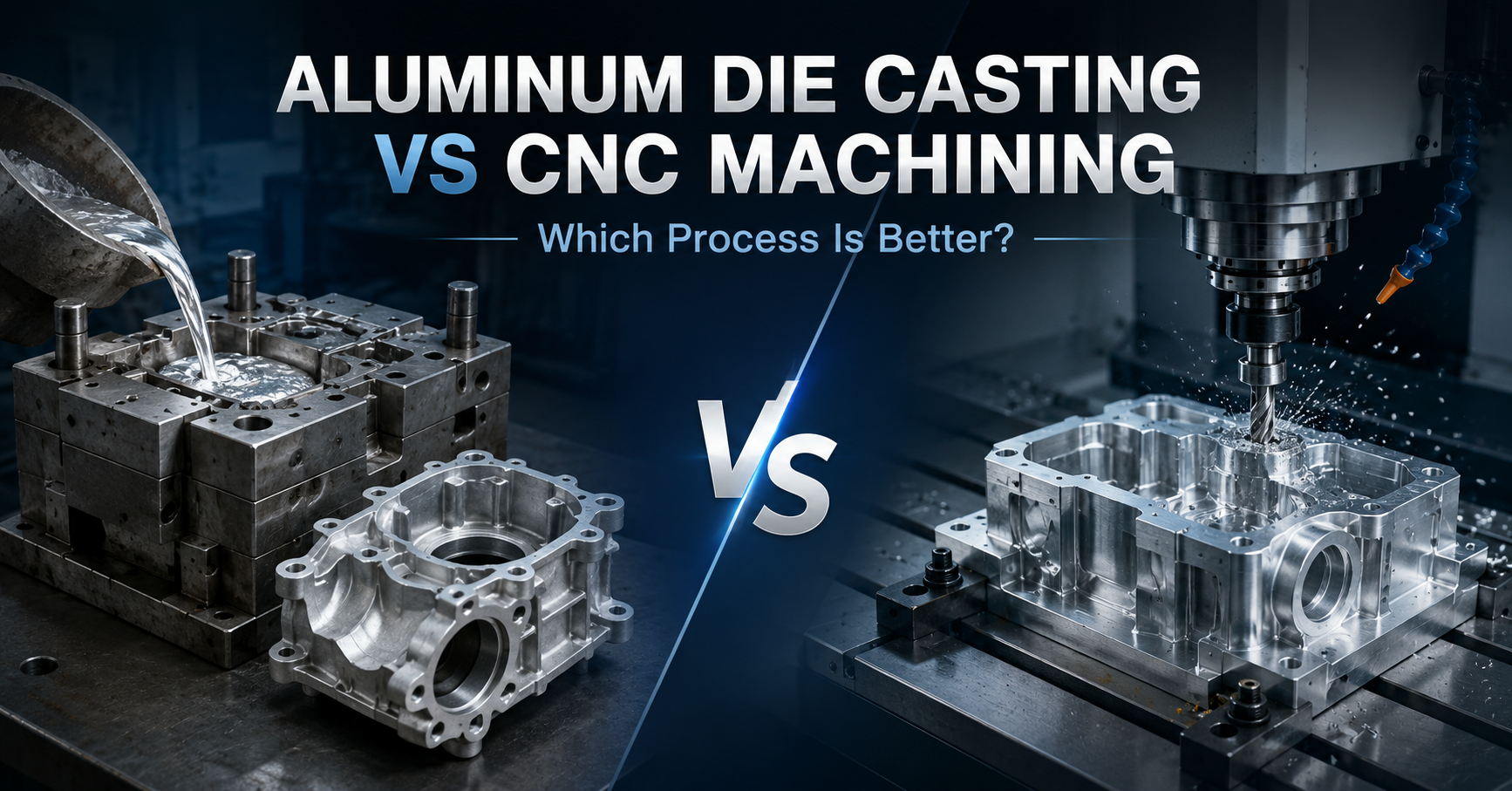
Aluminum die casting is a manufacturing process that produces metal components by injecting molten aluminum alloy into a precision steel mold under high pressure.
Compared with traditional machining methods, aluminum die casting can create complex shapes closer to the final product geometry.
The process typically includes:
- Mold design
- Tool manufacturing
- Aluminum melting
- High-pressure injection
- Cooling and solidification
- Part removal
- Trimming and finishing
- Quality inspection
Aluminum die casting is widely used for components requiring:
- lightweight structures
- good thermal performance
- corrosion resistance
- complex geometry
- high production efficiency
Common applications include:
- motor housings
- electronic enclosures
- automotive components
- pump bodies
- industrial equipment parts
- lighting components
Key Aluminum Die Casting Design Considerations
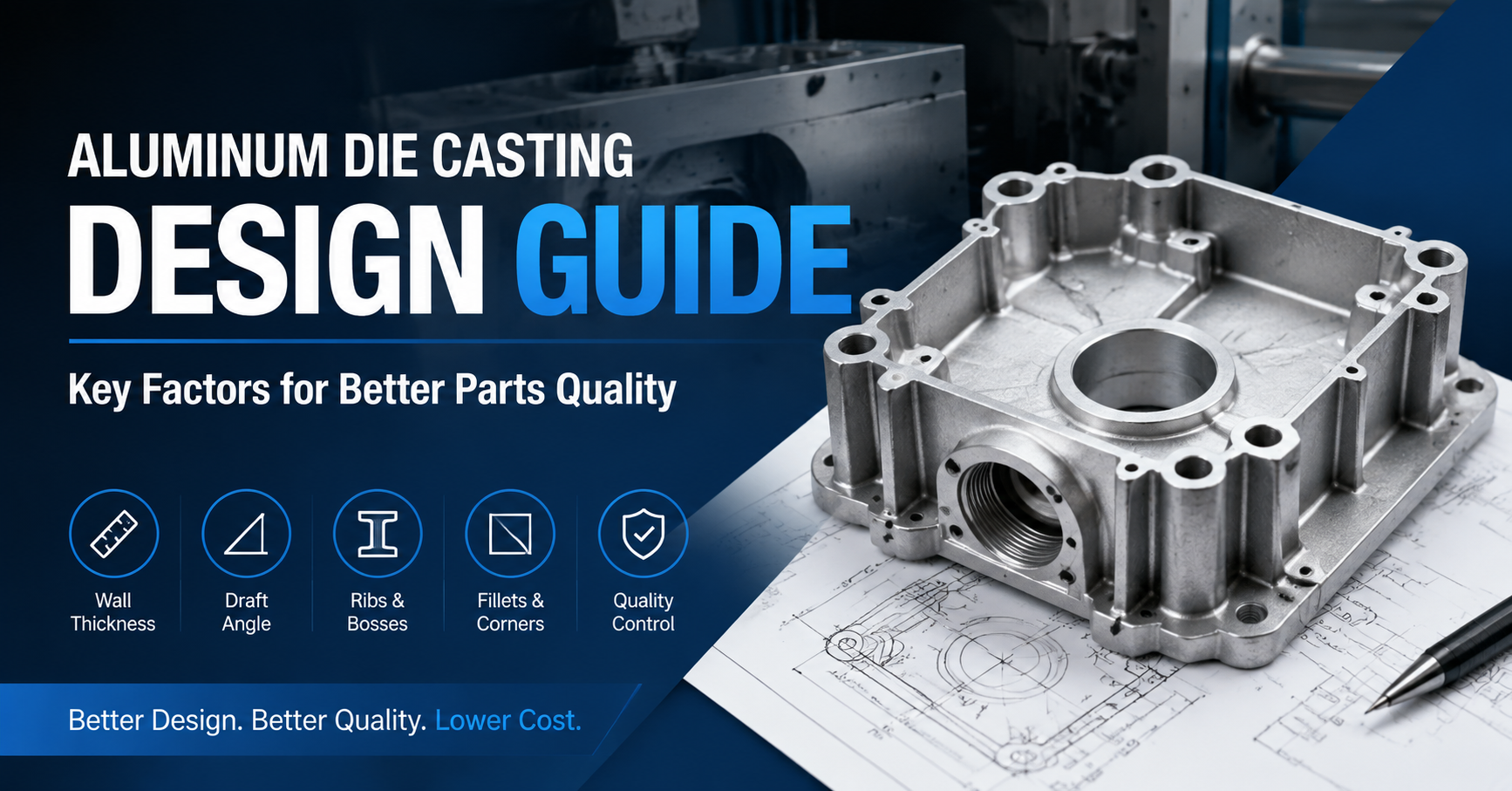
A successful die casting design must consider both product performance and manufacturing requirements.
Important design factors include:
- wall thickness
- draft angle
- ribs and bosses
- fillets
- parting line
- machining allowance
- surface requirements
Ignoring these factors can increase tooling cost and create production challenges.
Wall Thickness Design for Aluminum Die Casting
Wall thickness is one of the most important factors in aluminum die casting design.
Uneven wall thickness can cause:
- shrinkage
- internal porosity
- deformation
- inconsistent cooling
A good design should maintain relatively uniform wall thickness whenever possible.
Benefits include:
- improved metal flow
- reduced casting defects
- better dimensional stability
- improved production consistency
When thicker sections are necessary, designers should consider:
- adding ribs
- improving geometry transitions
- reducing unnecessary material concentration
Draft Angle Requirements
Draft angle allows the cast part to be removed from the mold more easily.
Without sufficient draft angle:
- parts may stick inside the mold
- mold wear increases
- production efficiency decreases
Proper draft design helps:
- extend mold life
- reduce ejection problems
- improve surface quality
The required draft angle depends on:
- alloy selection
- surface finish requirements
- depth of the feature
- tooling structure
A professional die casting manufacturer will review draft requirements during the engineering stage.
The Role of Ribs and Bosses in Die Casting Design
Ribs and bosses are commonly used to improve strength without significantly increasing weight.
Ribs
Ribs help:
- increase structural stiffness
- prevent deformation
- reduce material usage
However, excessive rib thickness may create:
- shrinkage marks
- uneven cooling
- internal stress
Bosses
Bosses are often used for:
- screw mounting
- assembly connections
- positioning features
Proper boss design requires consideration of:
- wall thickness
- draft angle
- machining requirements
- fastening method
Fillets and Corner Design
Sharp corners create stress concentration during casting and cooling.
Adding fillets helps:
- improve metal flow
- reduce stress
- increase part strength
- improve mold filling
Smooth transitions are especially important for:
- structural components
- housings
- pressure-related parts
Tooling Considerations Before Production
Tooling is one of the largest investments in aluminum die casting.
Before mold manufacturing begins, suppliers should evaluate:
- part geometry
- cavity layout
- injection direction
- cooling channels
- ejector positions
- machining requirements
A professional supplier should provide Design for Manufacturing (DFM) feedback.
DFM review helps identify:
- difficult features
- unnecessary complexity
- potential defect areas
- cost-saving opportunities
Common Aluminum Die Casting Defects and Solutions
Understanding common defects helps buyers evaluate manufacturing quality.
| Defect | Possible Cause | Solution |
|---|---|---|
| Porosity | Gas trapped during filling | Improve venting and process control |
| Shrinkage | Uneven cooling | Optimize wall thickness |
| Short filling | Poor metal flow | Improve gating design |
| Cracks | Internal stress | Adjust design and cooling |
| Surface defects | Mold or process issues | Improve tooling maintenance |
A reliable casting supplier should have preventive quality control instead of only detecting defects after production.
Aluminum Die Casting Surface Finishing Options
After casting, many parts require additional finishing.
Common options include:
| Finish | Application |
|---|---|
| Shot blasting | Remove surface marks and improve appearance |
| Powder coating | Protection and decorative finish |
| Painting | Color and corrosion protection |
| Anodizing | Surface protection for aluminum |
| CNC machining | Improve critical dimensions |
The finishing method depends on:
- application environment
- appearance requirements
- dimensional tolerance
- customer specifications
How to Choose a Reliable Die Casting Manufacturer
Selecting the right supplier is critical for project success.
OEM buyers should evaluate:
Engineering Capability
Check whether the supplier provides:
- DFM analysis
- tooling suggestions
- process optimization
Production Capability
Important factors include:
- casting equipment
- tooling management
- production capacity
- finishing capability
Quality Control
A professional supplier should have inspection procedures covering:
- material verification
- dimensional inspection
- visual inspection
- functional testing
Manufacturing Experience
Experience with similar products helps reduce:
- tooling risks
- production problems
- quality issues
Aluminum Die Casting Design Checklist
| Design Item | Recommendation |
|---|---|
| Wall thickness | Keep consistent thickness where possible |
| Draft angle | Add sufficient draft for mold release |
| Corners | Use fillets instead of sharp edges |
| Ribs | Improve strength without excessive thickness |
| Bosses | Consider fastening and machining needs |
| Tooling | Review design before mold production |
| Finish | Define appearance and protection requirements |
Frequently Asked Questions
What materials are commonly used for aluminum die casting?
Common aluminum alloys include materials selected for strength, corrosion resistance, weight and casting performance. The best alloy depends on the application requirements.
Why is wall thickness important in aluminum die casting?
Wall thickness affects metal flow, cooling behavior and defect risks. Proper thickness design improves dimensional stability and reduces production problems.
Can aluminum die cast parts be CNC machined?
Yes. Many custom die cast parts require CNC machining for critical holes, mounting surfaces, threads and precision dimensions.
How can casting defects be reduced?
Defects can be reduced through proper part design, tooling optimization, process control and inspection procedures.
What industries use aluminum die casting?
Aluminum die casting is widely used in automotive, electronics, industrial equipment, automation and consumer product industries.
How early should a supplier be involved in design?
Early supplier involvement is recommended because manufacturers can provide DFM feedback before tooling investment.
Is aluminum die casting suitable for low-volume production?
It depends on tooling cost and project requirements. For very low volumes, CNC machining or alternative casting methods may be more economical.
What is the difference between die casting and machining?
Die casting forms parts using molds, while machining removes material from solid blocks. Die casting is usually better for higher-volume production, while machining offers more flexibility.