01
Substrate review
Confirm steel condition, cleaning, pretreatment and hydrogen-risk considerations before plating.
Substrate risks reviewed



Corrosion-resistant zinc plating for fasteners, brackets, stamped parts and steel assemblies. JINGLE reviews substrate, plating thickness, passivation, masking and post-treatment before production.
Protective plating for automotive, industrial equipment, hardware, automation and custom OEM programs.






A quick view of the information buyers need before sending a zinc plating RFQ. Final values are confirmed against substrate, thickness, passivation, appearance and hydrogen-risk requirements.
| Parameter | Capability details |
|---|---|
| Plating Process | Zinc electroplating with passivation or project-specific post-treatment |
| Part Envelope | To be confirmed - reserve tank, rack and handling envelope |
| Plating Thickness | To be confirmed - target range by specification and substrate |
| Appearance | Clear, blue, yellow or project-specific passivation / appearance |
| Materials | Carbon steel, alloy steel and compatible ferrous components |
| Masking | Threads, bores, contact points and cosmetic faces masked per drawing |
| Production Volume | Prototype, low-volume and batch production |
| Accepted Drawing Formats | STEP, IGES, Parasolid, SolidWorks, PDF drawing and DXF |
01
Confirm steel condition, cleaning, pretreatment and hydrogen-risk considerations before plating.
Substrate risks reviewed
02
Plan contact points and coverage around threads, bores and mating surfaces.
Coverage and contacts planned
03
Check thickness, appearance, adhesion and corrosion performance against the approved specification.
Finish requirements verified
Plating tanks, racks, rinse stages and controlled handling equipment.
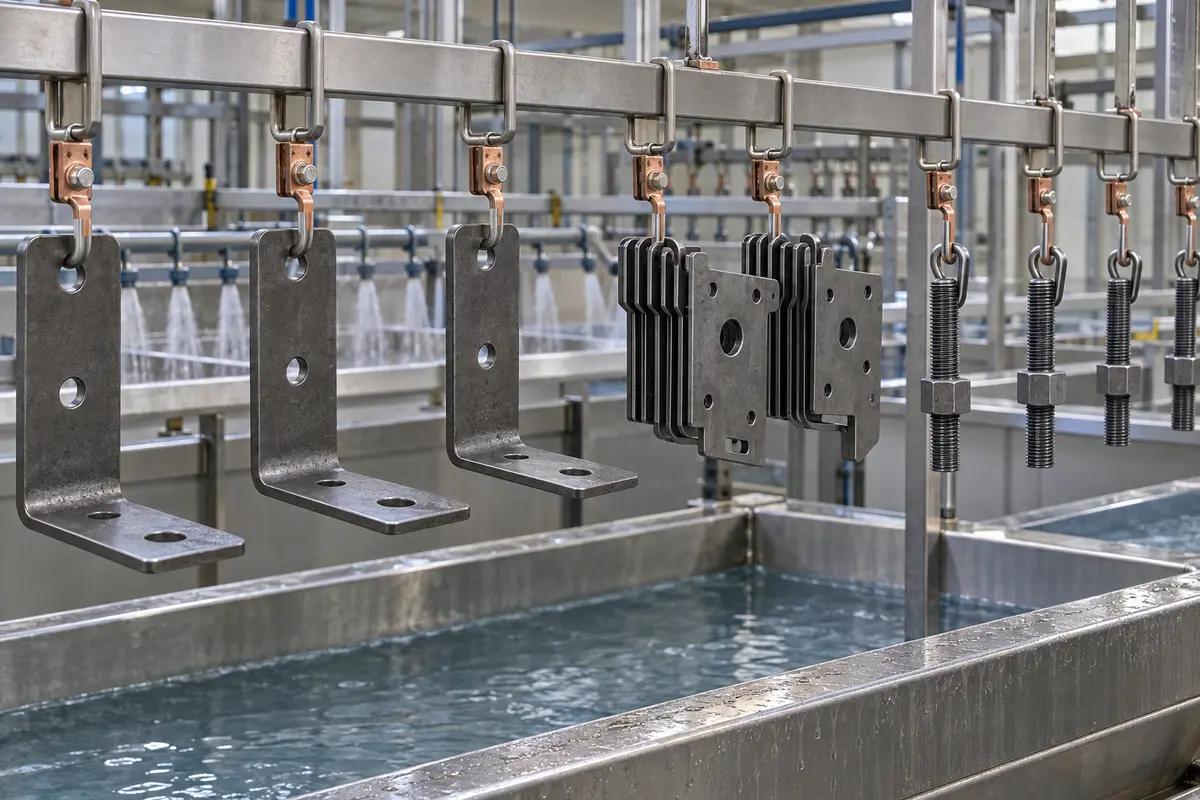
Racked steel components progressing through preparation and plating stages.
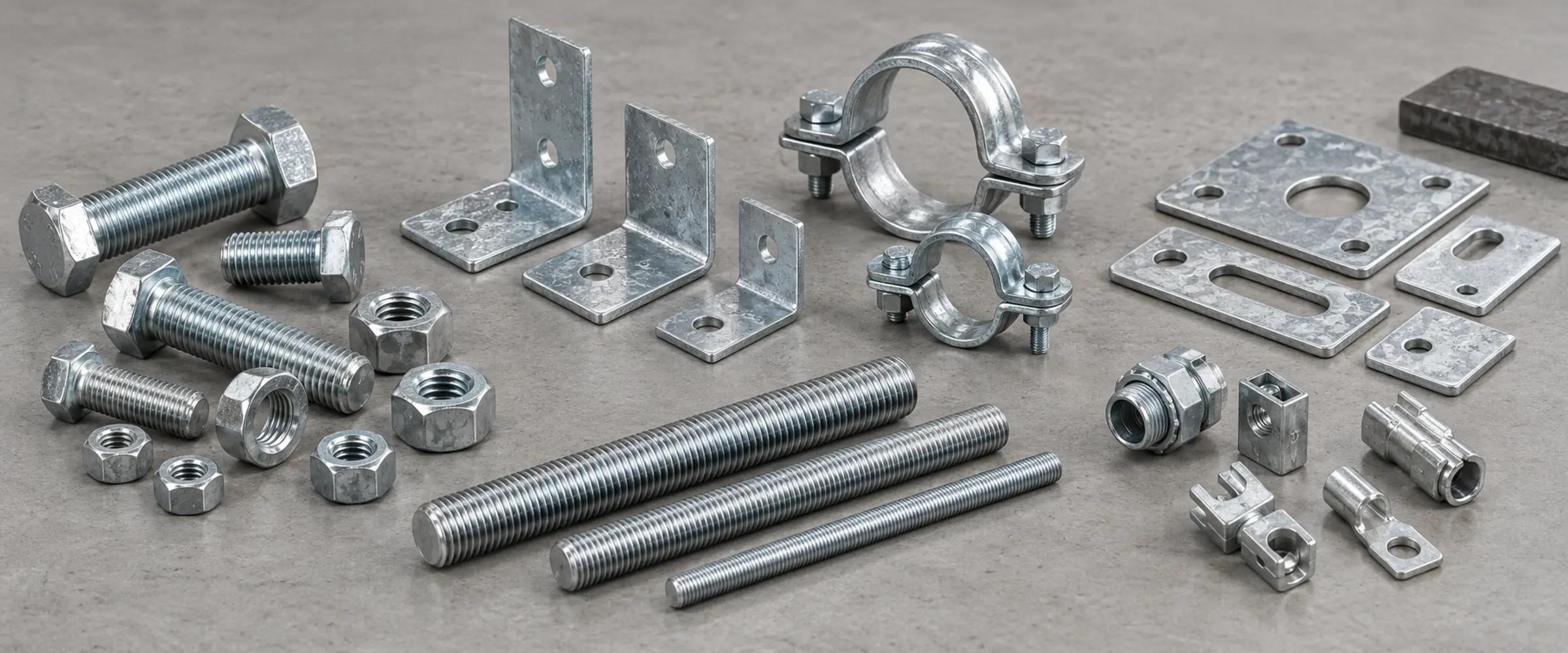
Plated hardware organized for thickness measurements and appearance review.
Threaded hardware with plating specification and fit requirements reviewed.
Stamped shapes with contact locations and coverage planned.
Cylindrical interfaces with specified plating and masking requirements.
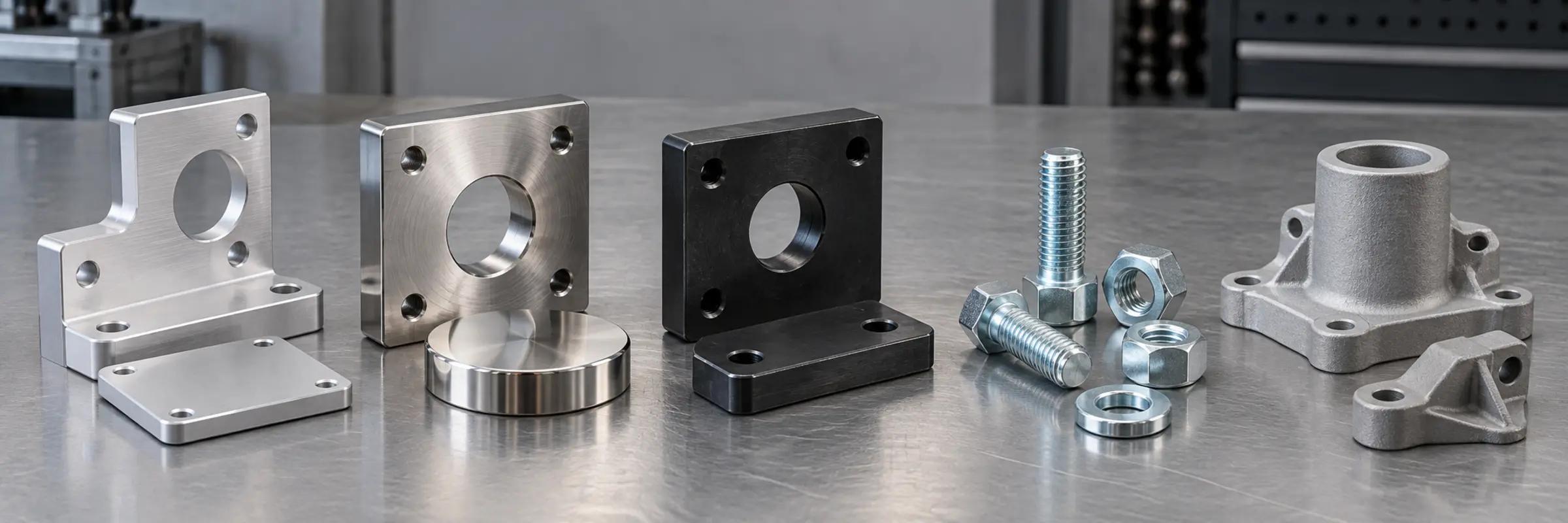
Steel hardware with substrate strength and post-treatment needs reviewed.
Panels and fittings finished to agreed appearance and protection criteria.
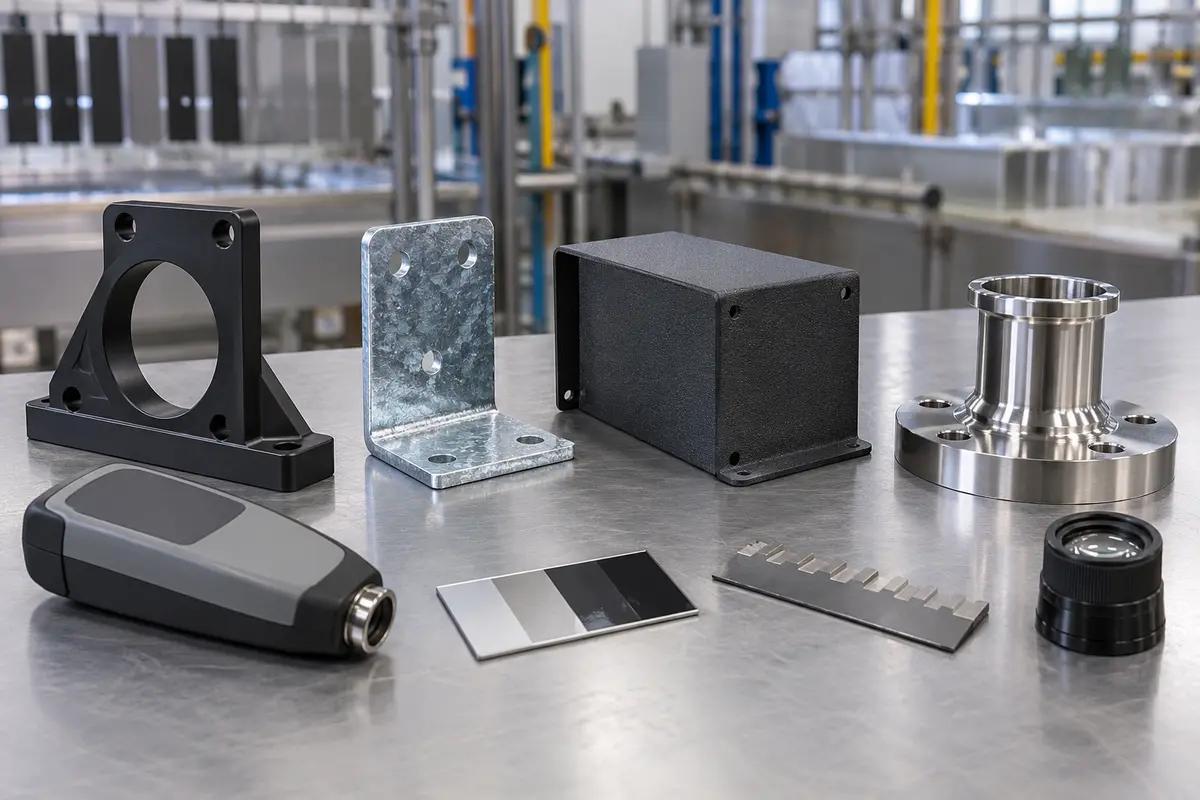
Custom steel parts with specification-led passivation and inspection.
general corrosion protection
high-strength components
repeat stamped parts
machined interfaces
fasteners and fittings
Confirm steel grade, condition and certificates, including hydrogen-embrittlement considerations.
Check cleaning, rack contacts and protected areas before plating.
Measure thickness and review adhesion and appearance against agreed criteria.
Review specified corrosion-test evidence and post-treatment records before release.

01
Confirm appearance, coverage, masking and fit on first articles.
02
Support launch quantities with approved samples and controlled rack loading.
03
Repeat the approved cleaning, plating and post-treatment route.
01
Confirm plating thickness, passivation and applicable standards before processing.
02
Review steel strength, contact points, masking and any required embrittlement-relief treatment.
03
Approve initial plated samples before launch quantities and repeat batches.
04
Align inspection locations and acceptance criteria with functional surfaces.
05
Agree material, plating and passivation records during RFQ review.
06
Clarify substrate, specification, quantities and no-plate areas before quoting.
Carbon steel, alloy steel and compatible ferrous fasteners, brackets and machined parts can be reviewed. High-strength parts require a specification-led hydrogen-embrittlement review, including any required relief treatment and verification.
Clear, blue, yellow or project-specific appearances can be evaluated with the passivation system. Appearance alone does not define chemistry or compliance, so specify the required standard and restricted-substance requirements.
Racking, contact points and plating conditions are planned around geometry and significant surfaces. Thickness and coverage are checked at agreed locations against the approved specification.
Threads, bores and contact points can be reviewed for masking. Mark no-plate zones and final fit requirements so coverage and contact locations can be planned together.
Plating thickness, passivation and specified corrosion-test records can be included when agreed in the inspection scope. State test standards, acceptance criteria and any post-treatment documentation required with the RFQ.
Send the drawing with steel grade and condition, plating specification, thickness, passivation, quantity and masking requirements. Include critical fits, service conditions and hydrogen-risk requirements where applicable.
Send the drawing with substrate, plating thickness, passivation, quantity and masking requirements. We will review the plating route before quoting.

Related surface finishing processes