01
Alloy and billet review
Match heating range, billet size and reduction strategy to the required properties.
Billet and alloy matched


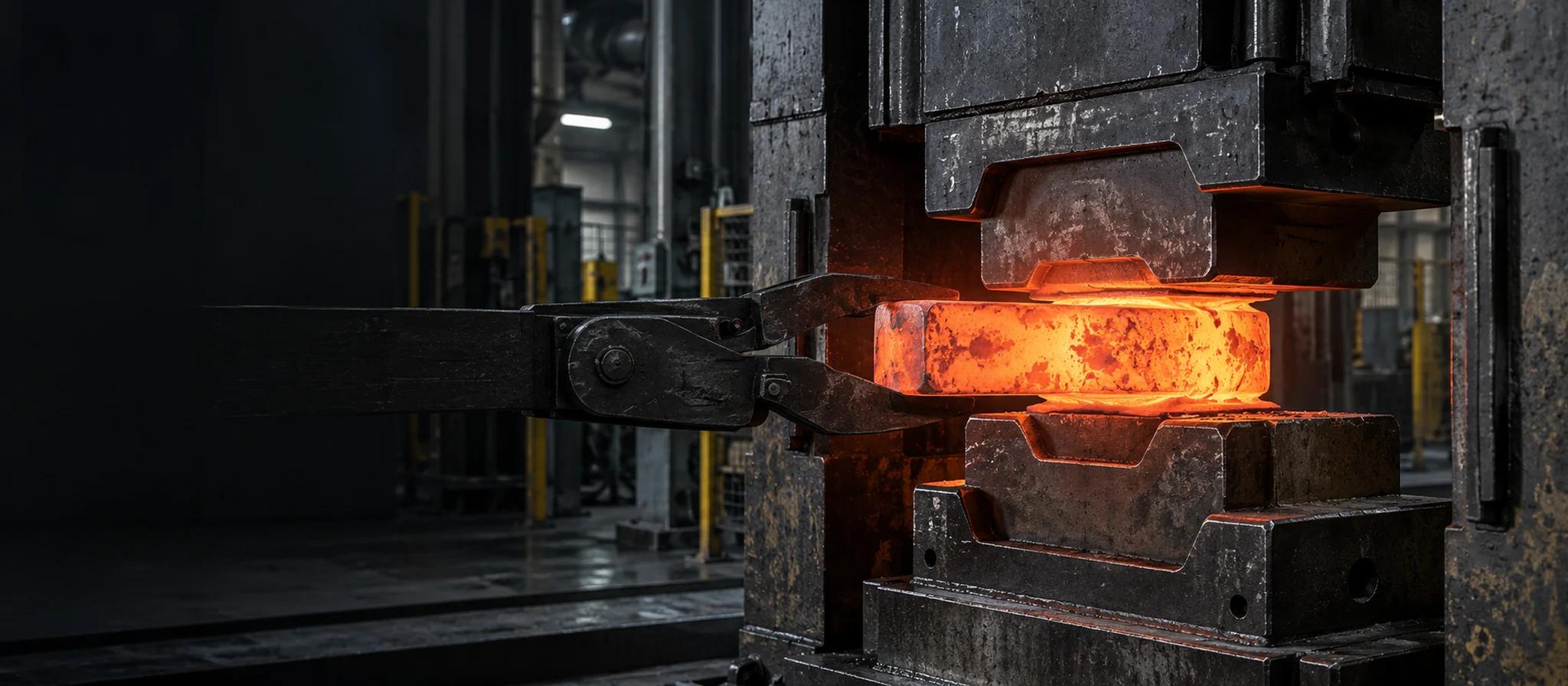
High-strength hot-forged components for shafts, flanges, drivetrain parts and industrial assemblies. JINGLE reviews alloy, billet size, die strategy and downstream machining before production.
Forged components for automotive, industrial equipment, energy, fluid control and custom OEM programs.






A quick view of the information buyers need before sending a hot forging RFQ. Final values are confirmed against alloy, billet, die, heat treatment and machining requirements.
| Parameter | Capability details |
|---|---|
| Forging Process | Hot closed-die, open-die or project-specific forging route |
| Max. Forging Size | To be confirmed - reserve press, hammer and die envelope |
| Typical Tolerance | To be confirmed - quote-specific forged and machined range |
| Material Section | To be confirmed - billet size and section range by alloy |
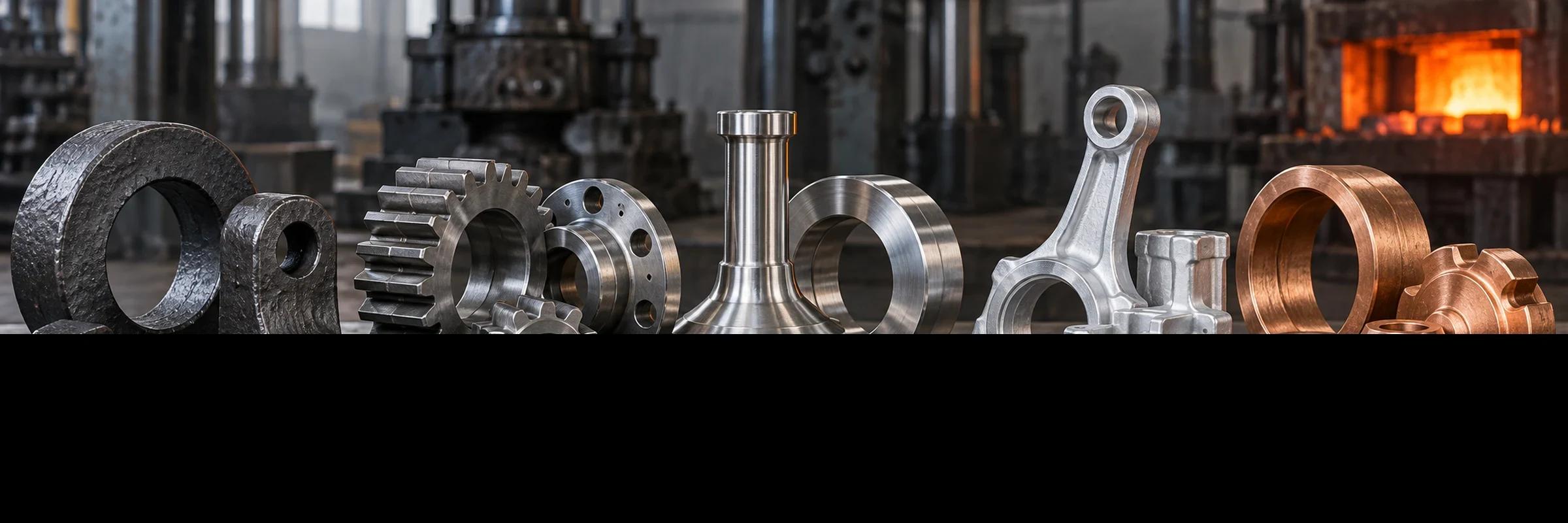
| Materials | Carbon steel, alloy steel, stainless steel, aluminum and titanium alloys |
| Secondary Operations | Heat treatment, shot blasting, trimming, machining and surface finishing |
| Production Volume | Prototype, low-volume and batch production |
| Accepted Drawing Formats | STEP, IGES, Parasolid, SolidWorks, PDF drawing and DXF |
01
Match heating range, billet size and reduction strategy to the required properties.
Billet and alloy matched
02
Plan die parting, flash, trim and fill around the final geometry.
Die fill and trim planned
03
Coordinate heat treatment, machining stock and inspection before release.
Finishing route coordinated
Forging presses, dies and heated billet handling equipment.
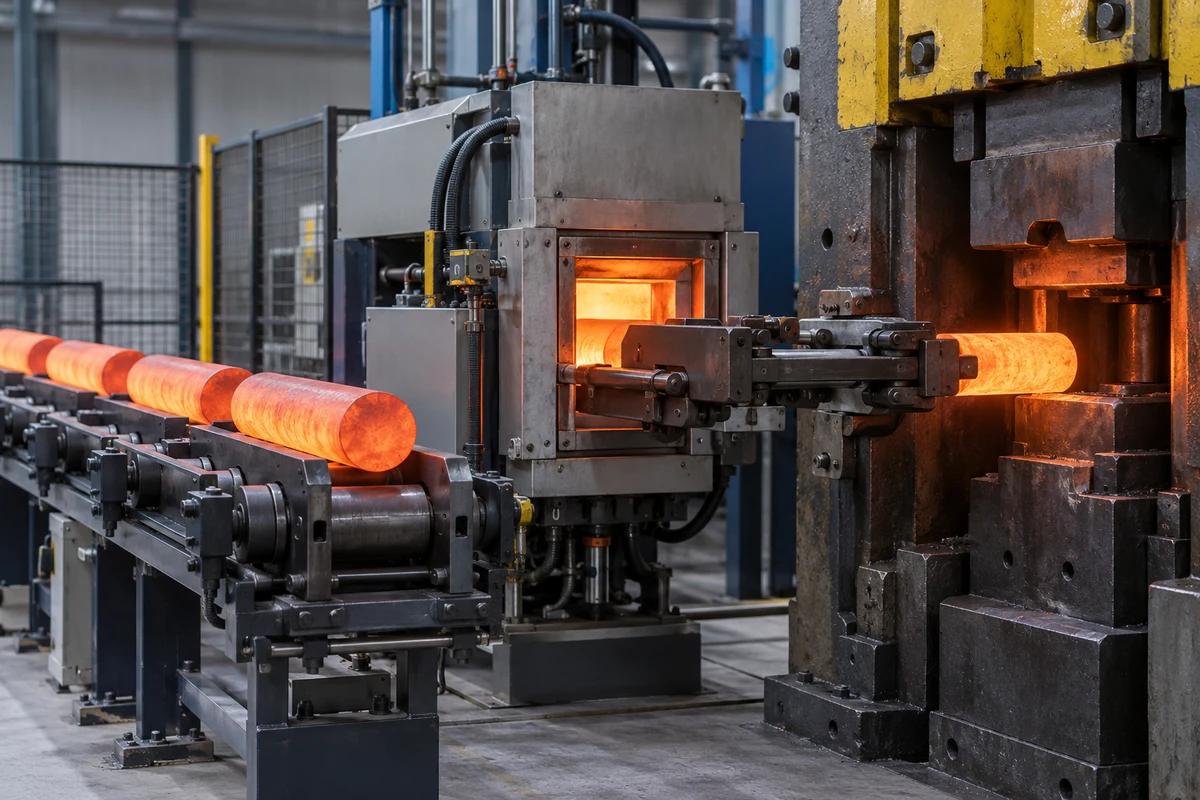
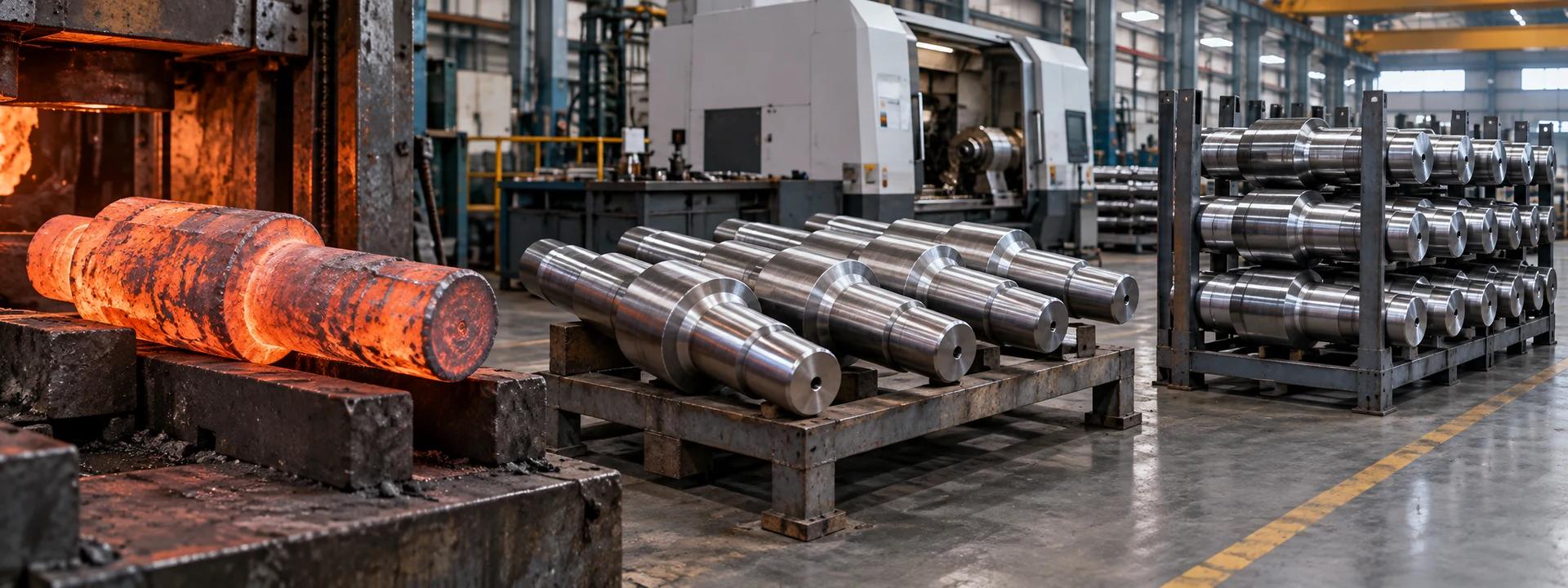
Heated billet forming within the die and controlled working envelope.
Trimmed forgings prepared for heat treatment, machining and dimensional inspection.
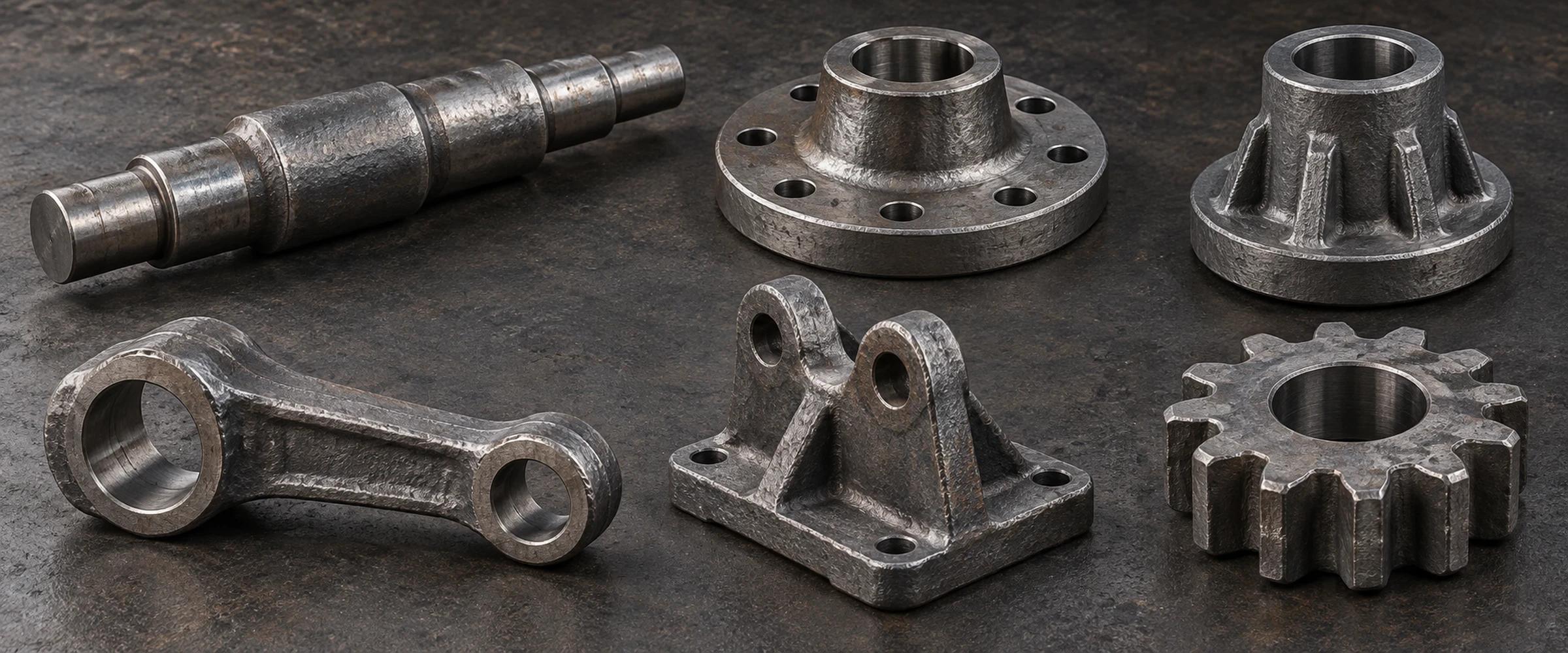
Forged shaft and flange shapes with planned machining stock.
Load-bearing geometry reviewed for material flow and finished interfaces.
Forged blanks for transmission and rotating equipment components.
Pressure-related components reviewed against alloy and inspection requirements.
Hub profiles with controlled material distribution and machining references.
Drawing-led forgings developed around geometry, quantity and required properties.
load-bearing shafts
high-strength interfaces
corrosion-resistant parts
lightweight structures
performance-critical components
Verify billet grade, chemistry records and required material traceability.
Check preform condition, die fill and trimming checkpoints against the process plan.
Review the specified treatment condition and agreed hardness checks.
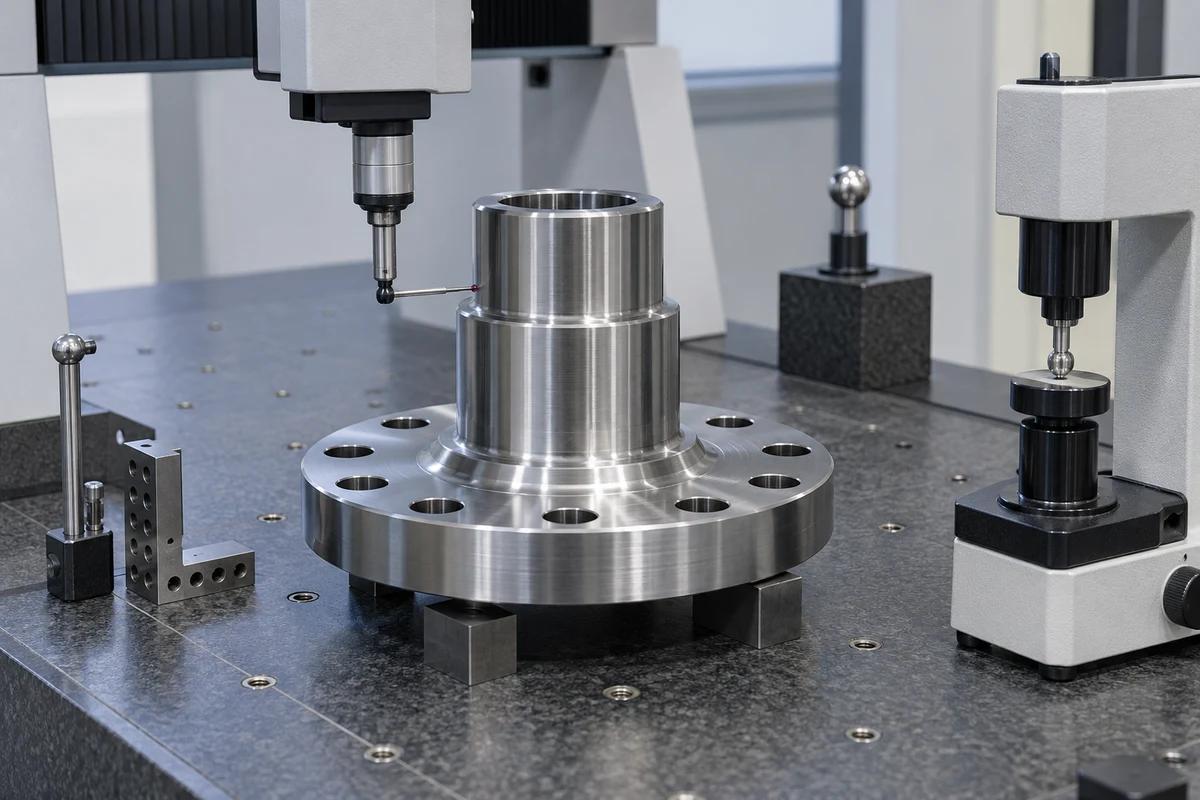
Measure finished dimensions and perform any NDT agreed in the inspection plan.
01
Validate die concept, material flow and machining allowance on the first article.
02
Support launch quantities with documented forging and inspection checkpoints.
03
Repeat the approved billet, die, heat treatment and finishing route.
01
Review parting lines, draft, radii and machining stock before die release.
02
Plan billet distribution and die filling around the required forged geometry.
03
Validate initial forgings before launch quantities and scheduled batches.
04
Coordinate treatment requirements with hardness and dimensional checkpoints.
05
Agree material certificates, process records and any required NDT reports at quotation.
06
Review the model, alloy, quantity and inspection scope before confirming the quotation route.
Carbon steel, alloy steel, stainless steel, aluminum and titanium alloys can be reviewed for hot forging. The specified grade, geometry and required properties determine the proposed billet and treatment route.
Hot forging can be a candidate when load paths, grain flow or recurring volume favor a shaped blank rather than machining entirely from stock. Share the model, alloy and demand so tooling, machining stock and inspection requirements can be compared.
Prototype and low-volume routes can be evaluated alongside batch production. Send the drawing, alloy and quantity so die requirements and first-article checkpoints can be confirmed.
Heat-treatment certificates and NDT reports can be included when agreed in the inspection plan. Specify applicable standards, acceptance criteria and required records with the RFQ.
Machining allowance depends on the alloy, forging geometry, treatment condition and finished features. Provide the finished drawing and critical datums so stock can be reviewed before tooling release.
Quotation timing depends on the completeness of the 3D model, drawing, alloy, quantity and inspection requirements. We review those inputs and confirm the quotation schedule rather than promise a fixed turnaround.
Send the model, drawing, alloy and quantity. We will review billet, die, heat treatment, machining stock and inspection before quoting.

Related forging processes