

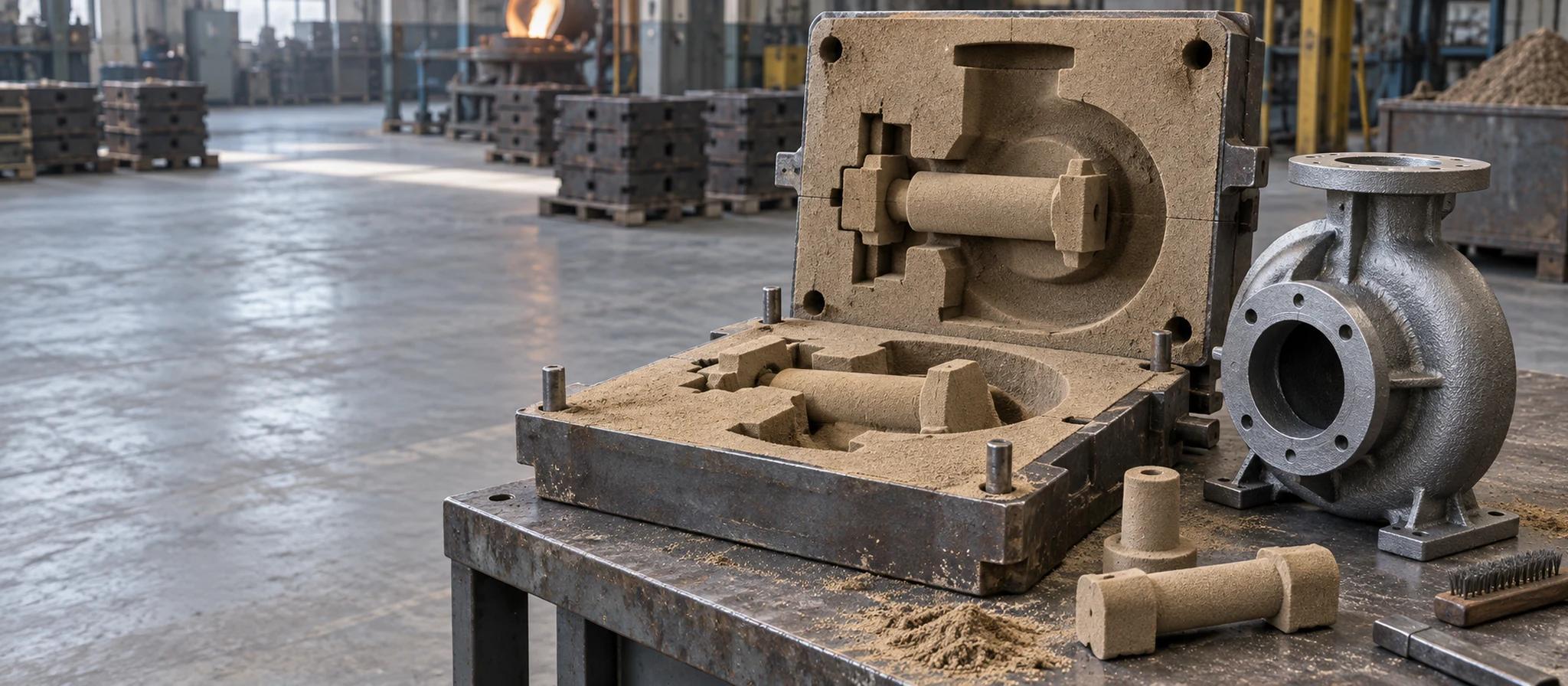
Sand Casting Services
Industrial sand castings for pump housings, machine bases, valve bodies and heavy-duty OEM components. JINGLE reviews pattern, core, gating and inspection requirements before production.
- Green Sand & No-Bake Options
- Large and Core-Formed Geometries
- Dimensional & NDT Inspection
Trusted by Customers Across Industries
Sand casting support for pumps, fluid control, industrial equipment, infrastructure and custom OEM programs.






Sand Casting Capabilities
A quick view of the information buyers need before sending a sand casting RFQ. Final values are confirmed against alloy, pattern, core design, mold route and finishing requirements.
| Parameter | Capability details |
|---|---|
| Casting Process | Green sand, no-bake or project-specific sand mold route |
| Max. Part Size | To be confirmed - reserve molding, pouring and shakeout envelope |
| Typical Tolerance | To be confirmed - quote-specific casting tolerance range |
| Surface Finish | To be confirmed - mold media, cleaning and secondary finish dependent |
| Materials | Gray iron, ductile iron, carbon and alloy steel, aluminum alloys, bronze and brass |
| Inspection | Visual, dimensional, hardness, chemical composition and NDT as required |
| Production Volume | Prototype, low-volume and batch production |
| Accepted Drawing Formats | STEP, IGES, Parasolid, SolidWorks, PDF drawing and DXF |
Pattern. Core. Pour. Controlled Release.
01
Pattern and core planning
Set parting lines, draft, wall transitions and internal passage strategy early.
Internal geometry planned
02
Gating and riser review
Plan fill, feeding and solidification around the geometry and alloy.
Feeding strategy reviewed
03
Cleaned and measured output
Coordinate shakeout, cut-off, blast cleaning and final inspection before release.
Release condition verified
See the Work Behind the Capability
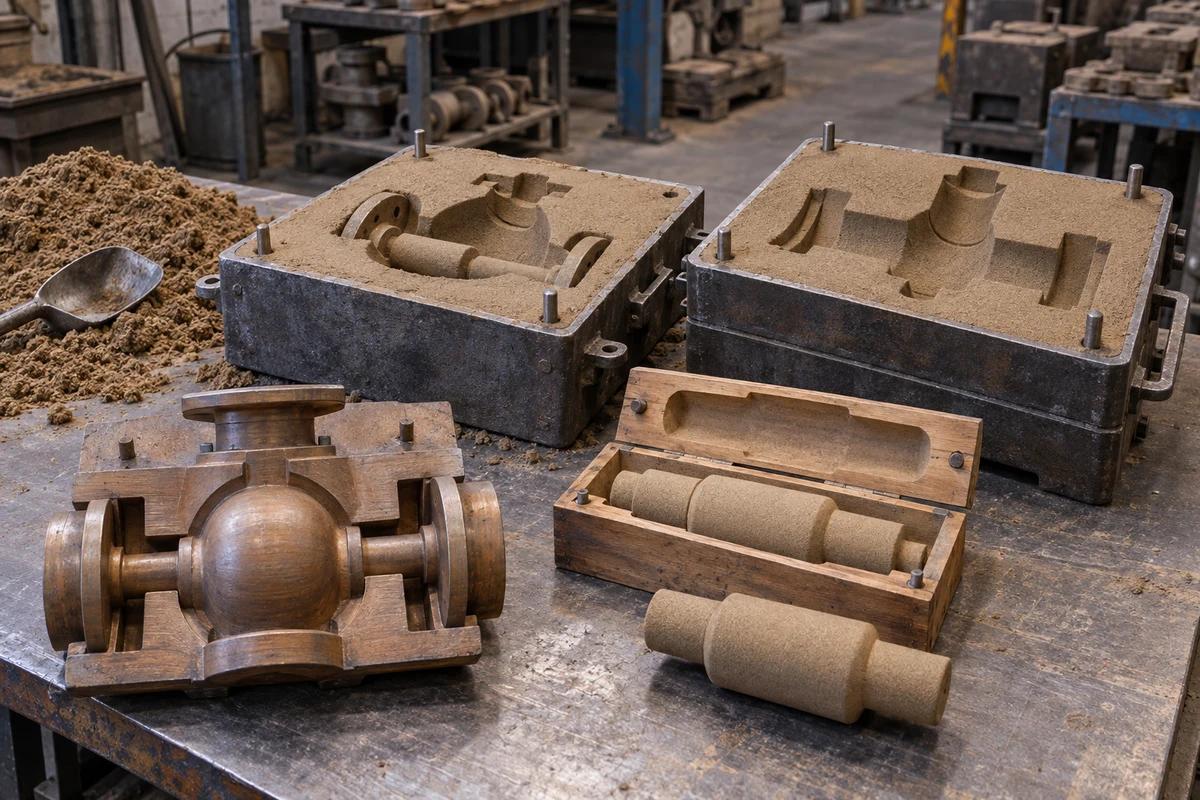
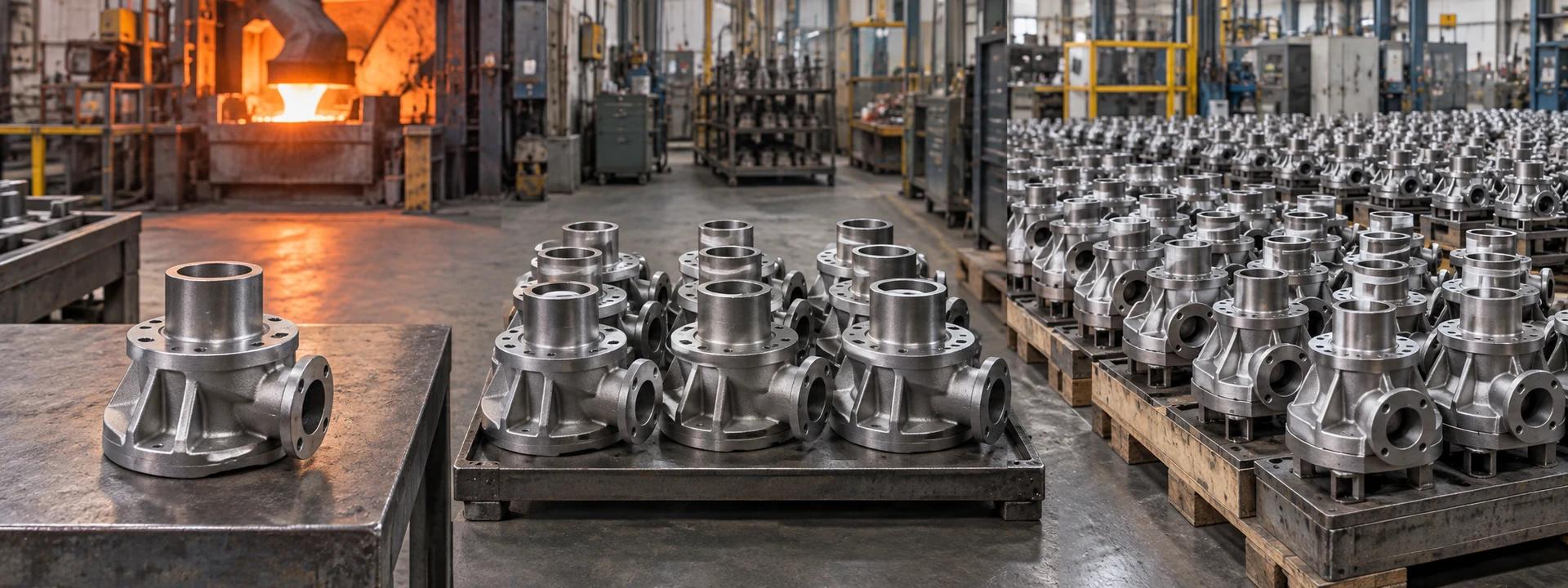
Real molding equipment
Patterns, flasks, cores and molding equipment in the foundry route.
Actual pouring and solidification
Protected molds and controlled pouring and solidification areas.
Real shakeout and finishing environment
Castings after shakeout, cut-off and blast cleaning, prepared for inspection.
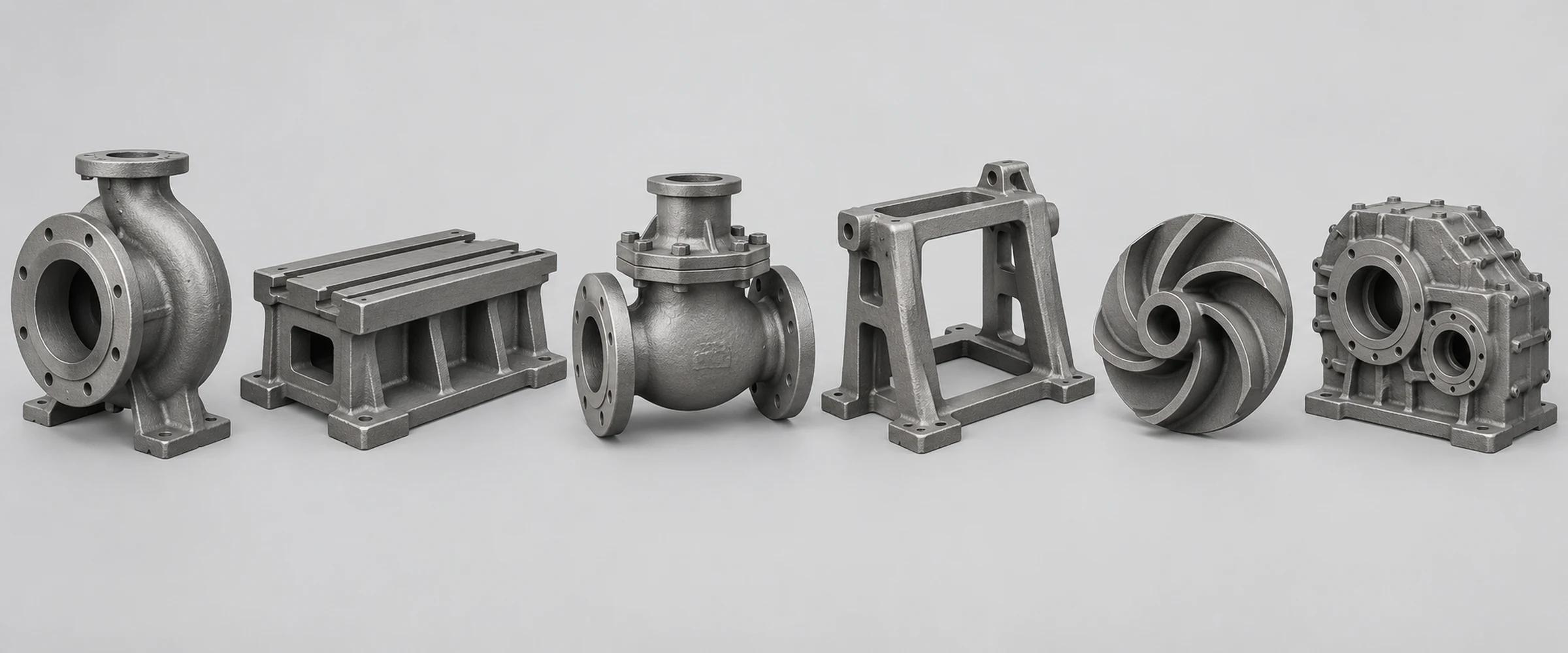
Parts We Commonly Cast
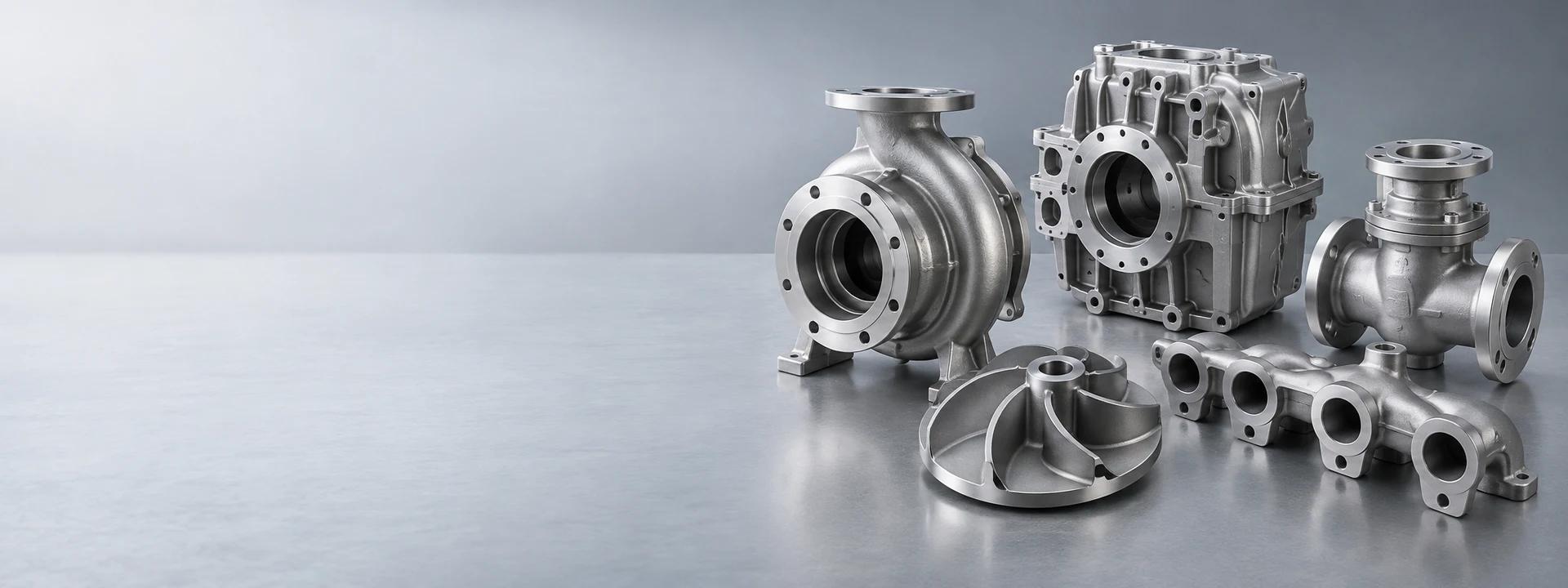
Pump Housings
Cored flow paths and machined mounting interfaces.
Valve & Hydraulic Bodies
Pressure-bearing bodies with defined inspection requirements.
Machine Bases
Rigid support structures with planned machining datums.
Large Brackets & Frames
Larger structural geometry for industrial equipment.
Industrial Impellers
Flow components with alloy and finishing requirements reviewed per project.
Heavy-Duty OEM Castings
Custom industrial parts with coordinated pattern, mold and finishing plans.
Materials We Cast
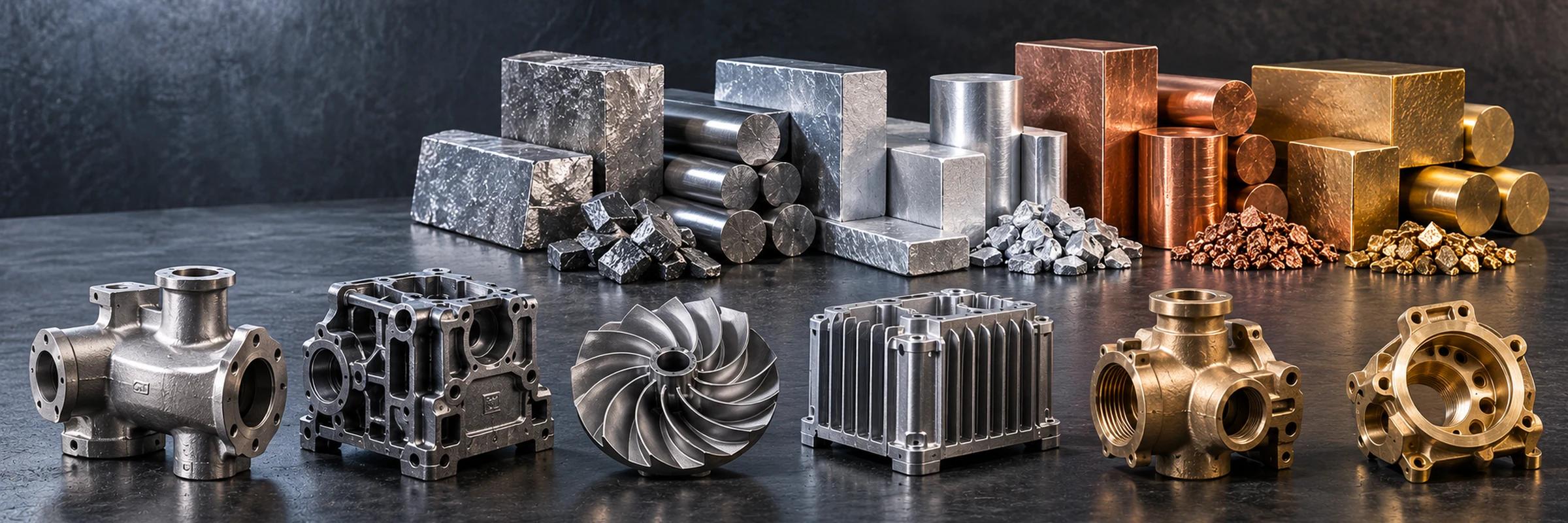
Gray Iron
wear-resistant housings
Ductile Iron
pressure-bearing components
Carbon & Alloy Steel
high-strength structures
Aluminum Alloys
lightweight castings
Bronze & Brass
fluid and bearing interfaces
Quality Evidence at Every Handoff
- 01
Incoming Material & Chemistry Review
Review the material grade, chemistry requirements and agreed traceability records.
- 02
Mold, Core & First-Pour Checks
Check mold and core condition and review first-pour castings against the process plan.
- 03
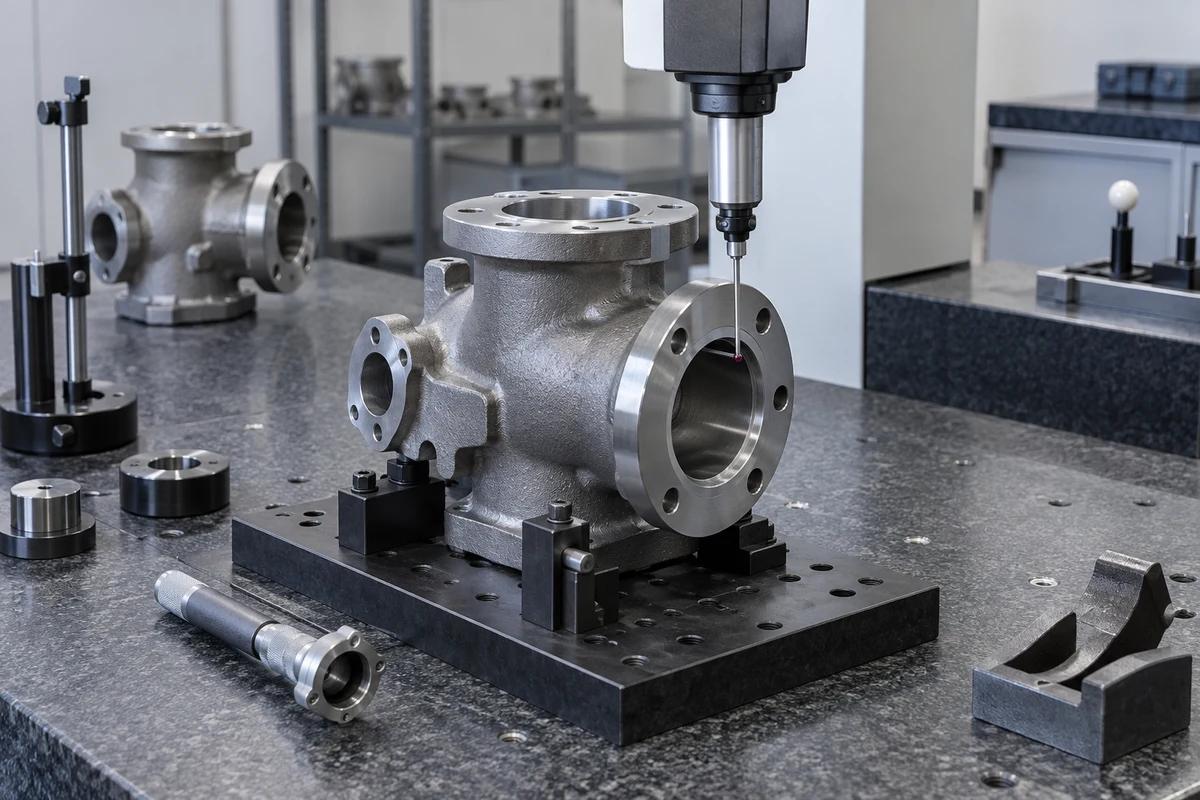
Dimensional, Hardness & NDT Inspection
Verify dimensions, hardness and any specified NDT against agreed acceptance criteria.
- 04
Final Inspection
Confirm cleaned casting condition, finished features and release documentation.
Documents available
- CMM Report
- FAI
- Material Certificate
- Hardness Report
- NDT Report
- CoC
- PPAP Upon Request
Prototype to Production
01
Prototype Castings
Validate pattern, core locations and machining allowance on the first article.
02
Low-Volume Production
Support trials and launch quantities with documented mold and inspection checkpoints.
03
Batch Production
Repeat an approved mold, pour and finishing route for planned demand.
Engineering Support You Can Use
01
Casting DFM Review Before Pattern Release
Review material, wall transitions and machining allowance before committing to the pattern route.
02
Pattern, Core & Gating Strategy
Coordinate parting lines, core support, feeding and internal passages around the casting geometry.
03
Flexible Prototype & Batch Production
Plan first articles, launch quantities and scheduled batches with documented mold checkpoints.
04
Controlled Foundry and Inspection Process
Align molding, pouring and cleaning with the dimensional, hardness and NDT inspection plan.
05
Material, Hardness & NDT Documentation
Confirm chemistry records, hardness results and required NDT reports during project review.
06
Responsive RFQ Support
Clarify material grade, size, quantity and finishing needs before confirming the quotation route.
Sand Casting FAQ
What part sizes are best suited to sand casting?
Sand casting is a candidate for larger, heavier or structurally complex industrial components. Send the model, drawing and estimated weight so molding, pouring and finishing envelopes can be confirmed.
Which iron, steel, aluminum and bronze grades can you cast?
Gray iron, ductile iron, carbon and alloy steel, aluminum alloys, bronze and brass can be reviewed. The specified grade, chemistry, heat treatment and inspection requirements determine the available route.
Can you cast internal passages with sand cores?
Sand cores can form internal passages where core support, removal and wall geometry are practical. Send section views or a 3D model so the core and inspection strategy can be assessed.
Do you accept prototype and low-volume orders?
Prototype, low-volume and batch routes can be reviewed against pattern and core requirements. Share the material grade, quantity and machining allowance to confirm a suitable plan.
Can you provide hardness, chemistry and NDT reports?
Hardness, chemistry and NDT reporting can be included when agreed in the inspection plan. Specify the applicable standards, acceptance criteria and required records with the RFQ.
What information is needed to quote a sand cast part?
Send the 3D model, drawing, material grade, quantity, machining stock and inspection requirements. Include any heat treatment, surface finish and delivery requirements for a complete route review.
Have a Large or Complex Casting to Develop?
Send the model, drawing, material grade and quantity. We will review the pattern, core, gating, finishing and inspection route before quoting.
- 3D Model
- Technical Drawing
- Material Grade
- Quantity
- Tolerance
- Machining Allowance
- Inspection Requirements
Related casting processes